[Photo: Carl Collison]
As an artist, dance, educator, choreographer, and project coordinator, Darion Adams (they/them) rightfully describes themself as a “multi-hyphenate dance artist”. Born and raised in Manenberg – a largely impoverished Cape Flats township synonymous with high rates of gang violence – Adams is also the founder of the AIM Society, a community-based initiative which, with often very little in the way of resources, pushes against the trope of Manenberg as a place of crime, violence and hopelessness. Central to the organisation’s ethos is a “commit[ment] to reshaping the cultural landscape of Manenberg through multidisciplinary arts initiatives, including Art in Manenberg and Dance at AIM”.
This hard work is yielding results. Adams’ commitment to not only their craft, but also the community from which they hail, has garnered them notable successes, including being elected by the US Consulate Cape Town for its Economic Development through the Arts Program and travelling across the United States to engage with various arts organisations. More recently, Adams was awarded the prestigious 2025 Pina Bausch Fellowship – a major coup for any dancer.
In this conversation with Carl Collison, Adams speaks about the difficulties they had growing up as a queer creative in Manenberg, their journey towards accepting themself and the community they live in, and how celebrating both these aspects of themself lead to their work being celebrated on the global stage.
Carl Collison (CC): So, after a year as a Pina Bausch fellow, you delivered your fellowship outcome in Germany recently. How did that go?
Darion Adams (DA): The presentation went really well. I did my presentation, titled ‘Môre, Môre, Môre’, at the 10-year celebration of the Pina Bausch Fellowship. It was the biggest one, I think, over the 10 years and it comprised the 2025 fellows – which is my year of fellowship – and the 2024 fellows doing presentations. In tandem with that, we had performances and presentations by previous fellows of their work and showings of their process and how their work has grown ever since their fellowship.
So, it was really an honour to be in the room with previous fellows and to be able to share space with them, dream, think, feel, and be in community as a fellowship community – especially with it being a Pina Bausch Fellowship, which is a very prestigious fellowship to be part of.
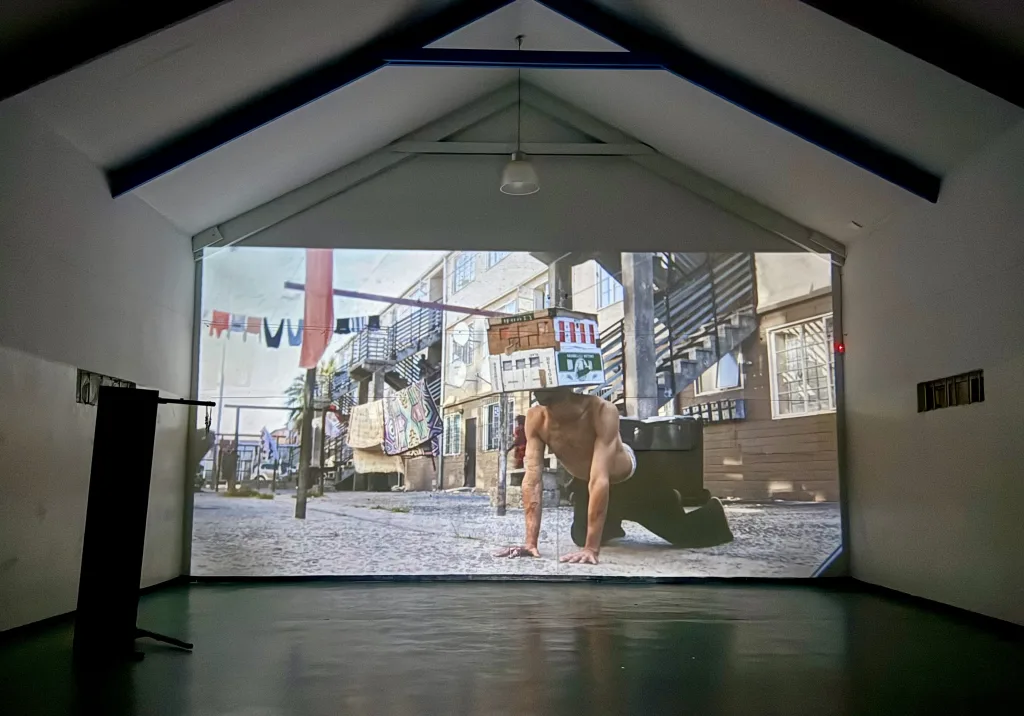
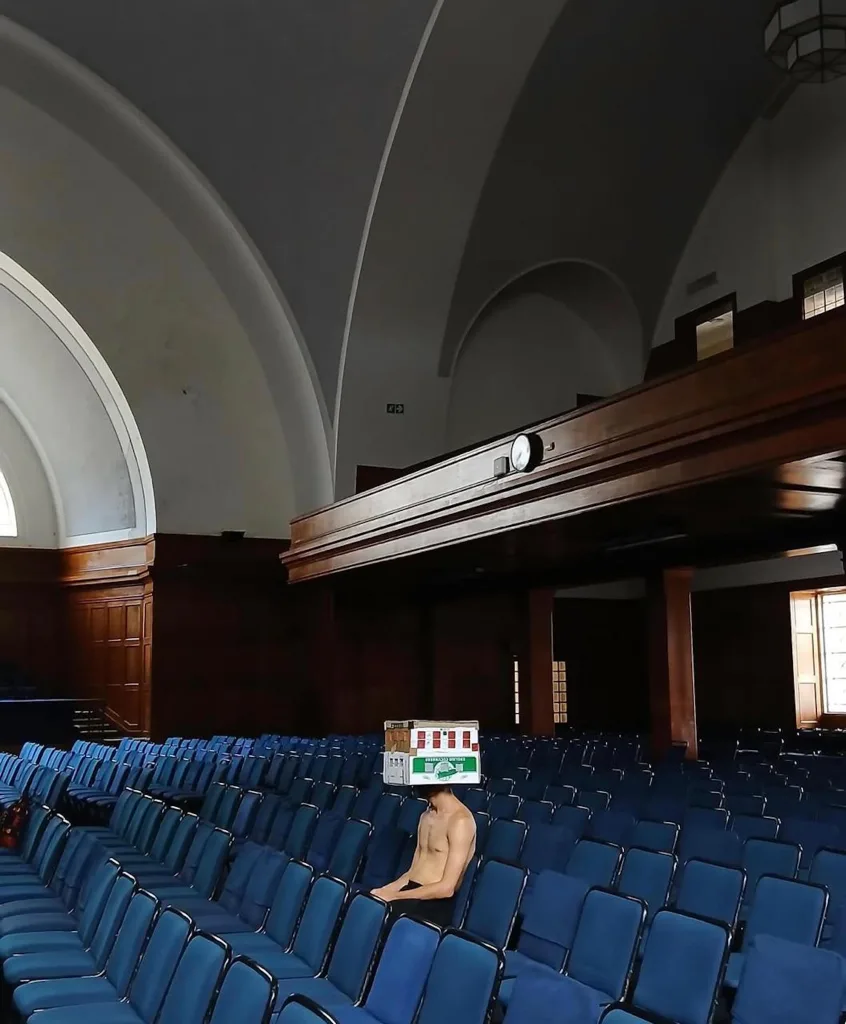
My presentation, ‘Môre, Môre, Môre’, was a collage and a combination of my four months practice, including my time spent with you and Aldo at Purple Mountain Arts Residency. I titled it ‘Môre, Môre, Môre’ because ‘môre’ is used to say ‘good morning’, but the word in itself means ‘tomorrow’. So, the future. And the piece really looked at what performances can be like in a community like Manenberg. I moved with a table and the table represents a system, but also a house; a home. The table represents things we have to move through to be able to tell our story. I navigated the table by moving it around my body, climbing over it, moving through the legs, and carrying it.
And then I treated the presentation like a site-specific or pop-up performance that I would do in Manenberg. So everyone was sort of living in that world with me. They were in Manenberg with me because, on the screen, during the performance, there were visuals of Manenberg and visuals of the road where I live. And then I then screened the film that I made with Nomandla Vilakazi. And I sat watching the film with the audience like I would do for the movie nights in Manenberg.
And I really, really was proud of bringing Manenberg to Wuppertal, Germany, and to the fellows who are from across the world – Australia, Nigeria, the US, Europe. So there was really a mixed bag of people from all over the world. So, it was really important for me to be able to then represent myself and my work, but also Manenberg in that space; transporting Manenberg with me all the time and transporting Manenberg so that other people could see the kind of context I work in, but also where the art stems from.
CC: You studied dance at UCT…
DA: Yes, I did a dance teacher’s diploma.
CC: Studying dance and you’re from Manenberg is a kind of, like, I would say, an audacious thing, almost. Why did you choose dance? And weren’t your parents like, ‘What the hell? You want to study what? How are you going to make money?’
DA: I mean, for me, studying dance was… I think I have quite a different story, in a sense, because I started dancing at [the age of] five in church. And I think that it was clear to me from day one that I would study dance, you know? So it was clear. And I was supported with that.
CC: Supported by who?
DA: By the people around me: my mom, my family. I think everyone sort of, in their minds, had questions about how I would make a living from this. So, people had questions, but it wasn’t something I was deterred by. It was just clear to me that this is what I would have to do. And I would just have to work towards making it real. And I guess everyone started believing it once I started earning. But I definitely had… There were a lot of questions around sustainability, I guess, from people all the time.
I studied dance teaching because it was what a lot of people around me did. The dance teachers that I knew, everyone told me to go into dance teaching because that’s how you’re going to make a living. When in fact, I didn’t want to do dance teaching. I wanted to be a performer, a maker; a theater-maker.
I didn’t want to go to UCT at all. I wanted to go to Jazz Arts Dance Theater to train as a dancer because I wanted to perform. That’s what I wanted to do. I did it because a lot of the advice that I was getting was, ‘go become a dance teacher; make something of yourself’. So I started at UCT to be a dance teacher, but I was never really happy in the field. When I did my teaching practice, I was bored. I didn’t like it – all of the work required to be a teacher within the school system. I thought it would kill my passion and my creativity; that it would kill my desires for myself, being caught up in a job in that way. It didn’t really fit the picture that I had in my mind for myself.
CC: I want to come back to Manenberg and your love for – or rather love-hate relationship with Manenberg – which you explored so beautifully in ‘Môre, Môre, Môre’. But let’s also talk about the AIM Society, which you founded, and how that also is an extension of your love-hate relationship with Manenberg…
DA: So, I actually made my first film, ‘Reclamation: Home’. It’s a three-minute film [I shot during] COVID [about] being stuck at home and not being able to sort of leave the place and sort of having to come to terms with being here, and me being able to accept that these are the cards that I’ve been dealt. That I’m not really going to go anywhere based on what’s happening in the world, right?
But I guess the love-hate relationship started off… I guess, growing up, I always saw life outside of Manenberg as a much better life. And I think we get told that from very young: that things are always greener on the other side. That there’s not this kind of violence and way of living. (I definitely grew up with that mentality; that idea that everything that is outside of Manenberg – or that is outside of me – is much better. So, yeah, I definitely grew up not liking the place because it’s not opulent and it’s not grand and it’s not fancy and it’s not as clean and polished as I would have liked it to be, you know? So, I didn’t like home, basically. Everything about home was ugly and distasteful in a way.
So I used to go out and almost never be at home because I would then be able to believe in the delusions that I can escape. And then I sort of realised, in my adulthood, that the grass is not greener outside – the grass is greener where I am. And then I went through a process of self-acceptance, realising that everything I do at home is… I rest, I eat, I sleep, I wash, I restart my days here.
So the question I had to myself was: why am I making home outside of myself when at home is where I rest? This is where I lay my head. This is where I recuperate. This is where I replenish myself when I’m exhausted and tired. So I’ve sort of had to re-teach myself to love everything about where I come from; where I live. Even though I’ve always wanted to do community work here because I’m an activist and I’m passionate about community, I only realised later that for me to do what I need to do, I need to first deal with my own issues around home. That’s when I started really looking at my perception of home and what’s important to me, you know.
So when I registered the AIM Society in 2023, it was me saying: ‘I’m claiming this thing for myself. I’m claiming this community for myself. And I’m claiming that this is where I work. This is where I live. This is where I find peace. This is where I find rest. This is where I am replenished and invigorated.’ So, then I saw the power of being here. I realized that everything that I want is at home. My mom is here. My family’s here. I’m at peace here. Even though there is violence. Even though there is crime. And even though it isn’t polished, my whole upbringing is here.
I’ve always felt that people judged where I come from. And so I had to downplay it because of people’s perceptions. People are very loud about the type of place that Manenberg is. And it was very frustrating to be someone from Manenberg and then be judged based on my background, you know?
CC: Especially in snooty art circles, right?
DA: Especially the snooty art circles. I remember I introduced myself before I’d even danced and then people would judge me. People would lift their noses. But now that I’m an adult, I don’t care. I’m from Manenberg. The person that you’re looking for is actually from Manenberg. The talent that you’re searching for exists here.
CC: Earlier you said that, for a long time, you felt as though everything that’s outside of Manenberg was better. And that everything outside of yourself was better. So, correct me if I’m wrong, but I’m now drawing parallels between you – your queerness – and Manenberg itself. Both are looked down upon in many ways, but you have forced yourself to find a home in both; in both this area that is looked so down upon and this way of being that is looked so down upon.
DA: Yeah, definitely. I think a big part of wanting to escape was because I was so bullied for being queer – and having to then find language and perspectives that could make me survive in this world. Because my queerness and my Manenberg-ness were things that people asked me to change and minimise all the time, because it was either too much or too rough. Not polished.
But I realised that so much of what people wanted to silence within me was exactly the thing that I needed to make louder, you know? And that those things are my superpowers. Being from Manenberg has always been my superpower. I’ve gotten recognition for my art more because I celebrated where I come from.
CC: The Pina Bausch Fellowship being particularly noteworthy, I guess…
DA: Yeah, absolutely. My entire practice for the Pina Bausch Fellowship was based in Manenberg. It wasn’t an industry fellowship. It was a community fellowship. When I really leaned into the fullness of where I come from and who I am as a person – as a queer person; as someone from Manenberg; someone who is coloured; who is indigenous; who is Khoi – it was celebrated, because it’s the truth and it’s not hidden. It’s not shied away from. I didn’t have to minimise it at all, you know?