[Photo: Carl Collison]
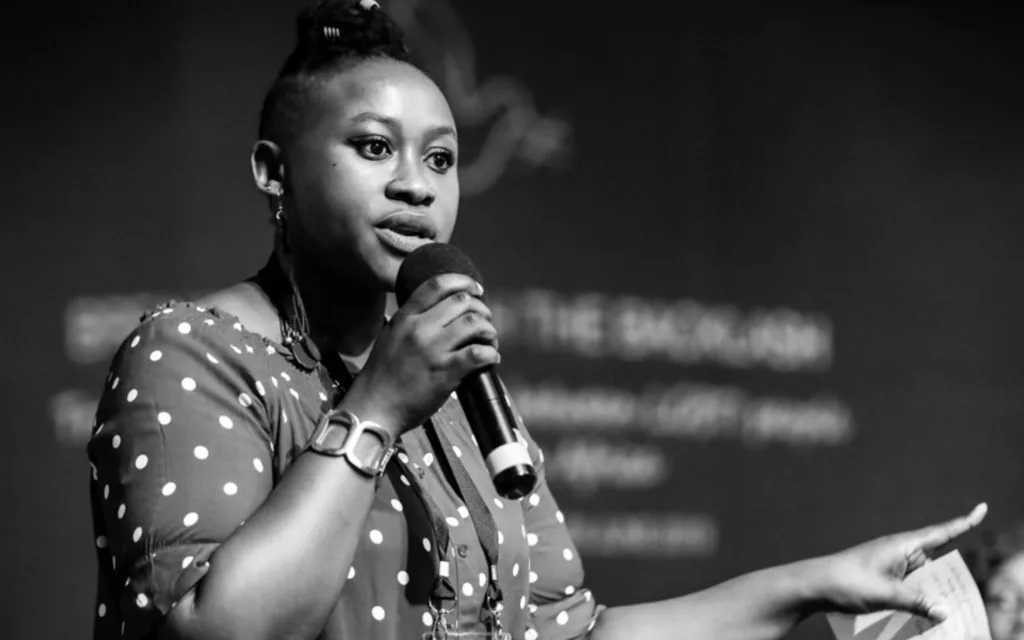
In March 2022, The Other Foundation hosted a convening of lesbian, bisexual and queer (LBQ) human rights from across Southern Africa. In the run-up to the convening, which brought together activists from Malawi, Namibia, Zambia, Zimbabwe, South Africa, and Mozambique, the Foundation noted that “despite regular violent attacks and rape of black lesbian women, gender non-conforming people and non-binary people in poor townships (often resulting in death) in the different parts of the region, LBQ organising and activism has been weak.” LBQ groups, it added, “remain one of the least organised, visible and resourced in the LGBTI movement of southern Africa”.
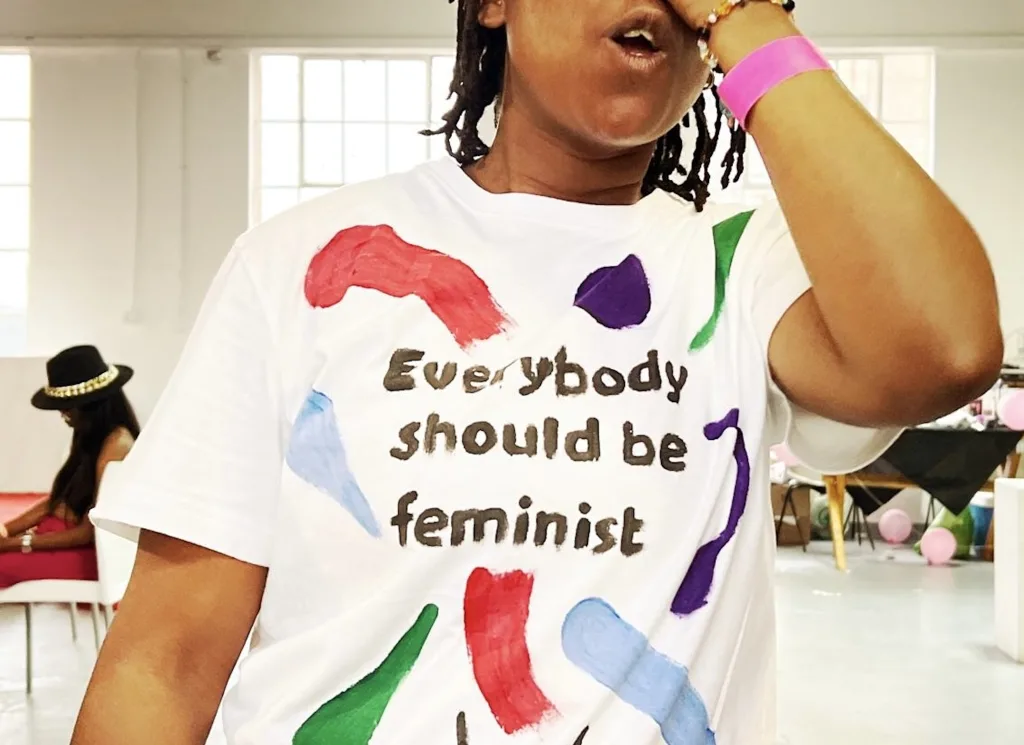
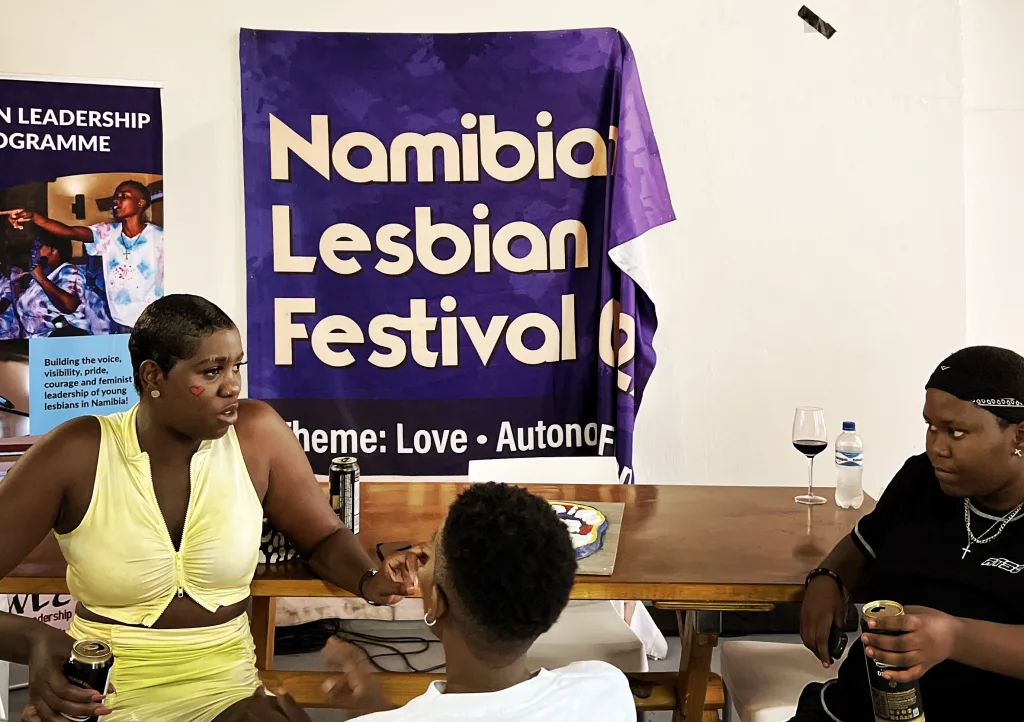
While, broadly speaking, this may be true, a few dedicated and passionate LBQ activists across the region are working tirelessly at changing this status quo. In this ‘In Conversation’ piece, Thuli Mwjara sat down with two of them: Hillary Shiimi, founder of Pride Pop-Up Namibia, and Mwale Banda, executive director of Zambia’s Women’s Alliance for Equality (WAfE). The three LBQ activists discuss the groundbreaking work they do, the challenges of working within environments often focussing largely on gay men, and their drive to “create spaces where LBQ people can show up, be themselves, dance, laugh, and celebrate”.
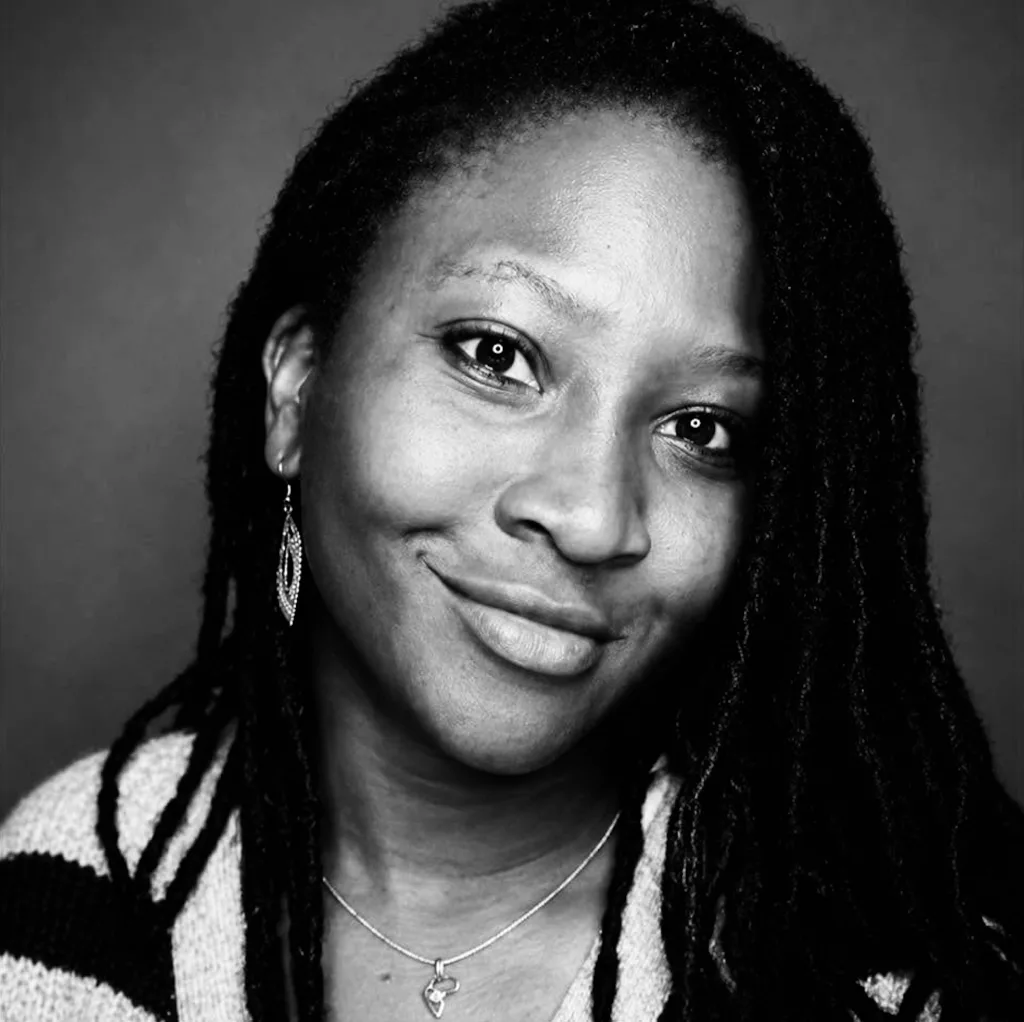
Thuli Mjwara (TM): Hi everyone… It’s really such a privilege to be with such creative people. The work you guys are doing is absolutely amazing. For the reader’s sake, let’s maybe start with who’s in this space? What have you curated? And where are you from? Maybe I will start… I am Thuli Mjwara, I am the strategic coordinator at Inclusive and Affirming Ministries. I have been called a “holy troublemaker” [for] causing trouble in faith spaces which are conservative. Hillary, tell us about you…
[Photo: Carl Collison]
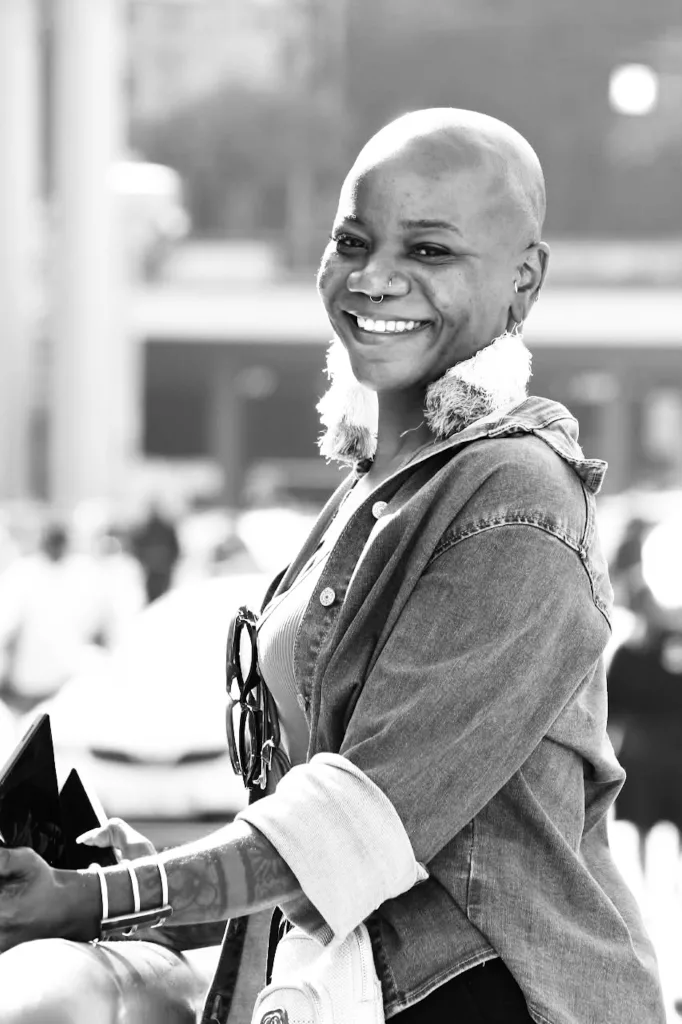
Hillary Uno Shiimi (HS): Ok… What have I curated? Let’s start with the Pride Pop-Up Namibia Entrepreneurship and Entertainment Network. Under this body, we have Pride Pop-Up Events, NamQueer Productions, and the Spectrum Awards Namibia, which is an LGBTQI-centered.
I’m the founder of NamQueer Productions, which is a film and documentary production company. And NamQueer, I’ve directed Uno and Hatago, which is a lesbian film. And then Voices Unheard, which is a documentary looking into transgender lives.
Our latest venture is Suɣu Yubu, a collaboration with Buchei Feminist Collective in Ghana. And it is basically documenting the lives of queer, lesbian, bisexual women in Tamale, northern Ghana. So, I’m quite excited for that current project which is ongoing.
Mwale Banda (MB): I am the co-founder and director for Women’s Alliance for Equality (WAfE), which is an LBQ-led focus organisation based in Zambia. WAfE has been in existence for over a decade now.
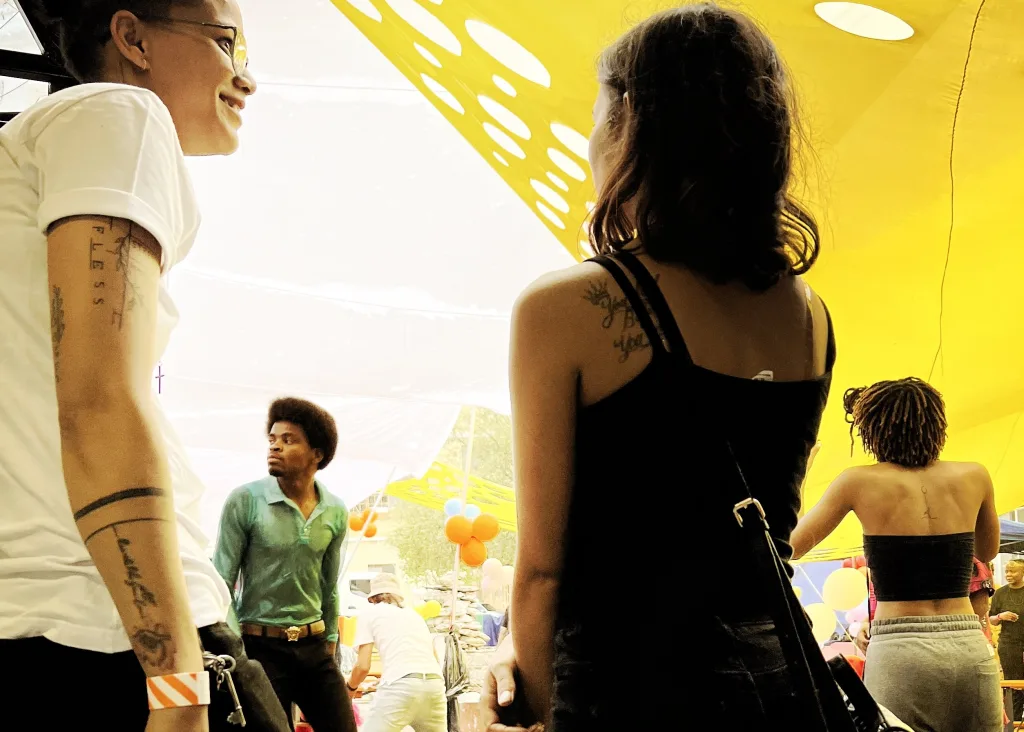
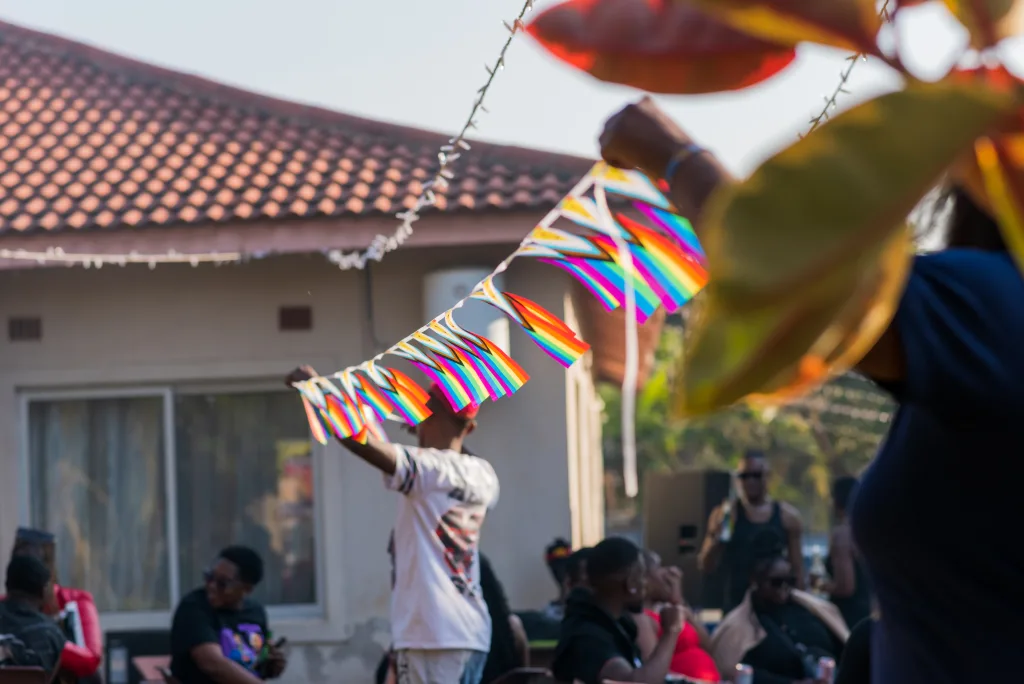
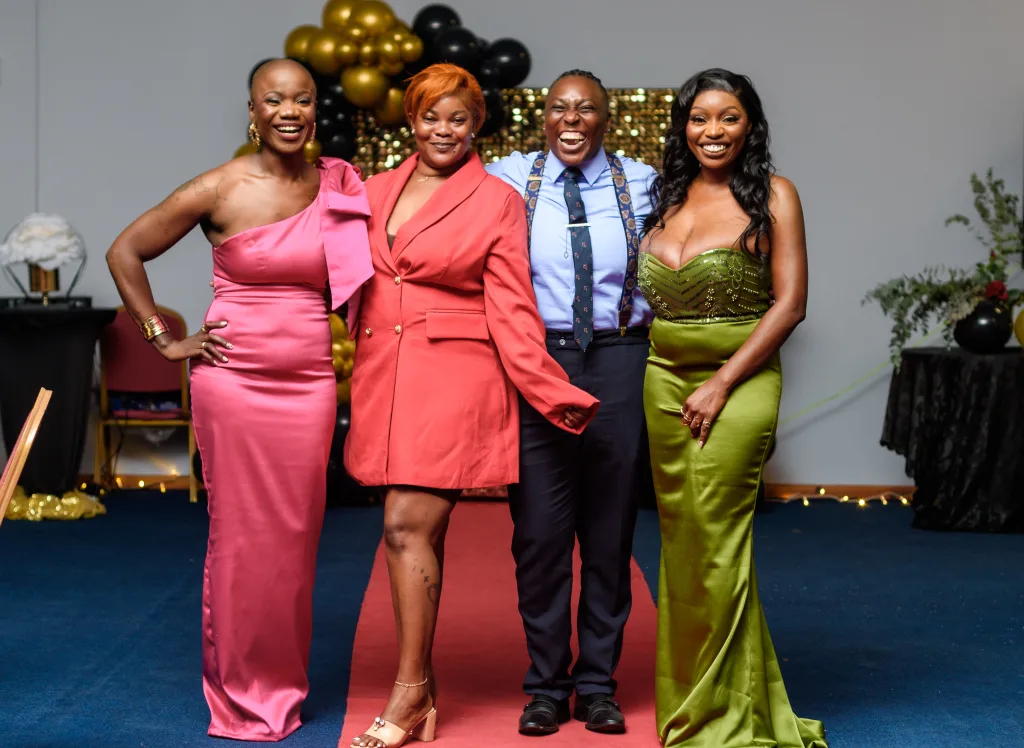
Some of the things that we’ve created include WAfE Pride, which we do on an annual basis. We also do Prom, which is also done annually. Prom is where we bring all the queer-bodied people within Lusaka together to just have a space to celebrate and be themselves.
We also do Queermas, and this is held at the end of the year. The reason why we have Queermas is because most of our queer people do not get the chance to celebrate Christmas with their family, but we do have a chosen family, which is the community. And with that, we have Queermas.
[Photo: Supplied]
What else do we do? So, we also do work around mental health, and part of the mental health work is to have the activities on Pride, Prom, as well as economic justice. And for economic justice, our work is around strengthening the community with skills, vocational skills, as well as giving them skills on financial literacy and mentorship and access to loans that are revolving capital loans. And yeah, basically that is what we’ve done, and that is what we’ve created at WAfE.
TM: Hillary, you have done the productions, the lesbian film, the trans voices documentary, and now moving into this intergenerational LBQ documentary… How has your identity shaped your artistic practice? How has your own story and your own being shaped your artistic practice?
HS: I’m glad to say that’s where it all started. Especially with my identity being [perceived as] sort of a threat – particularly in the male-dominated filmmaking and entertainment spaces that we’re in – as soon as I got out of varsity, it was really about trying to prove my point; trying to bring in more queer stories… and trying to write more queer concepts, but they would always get declined.
So, in that sense, my identity shaped most of what I am doing now. For me, it’s really just about creating spaces that I knew were lacking. That gap was there. And up until now, it’s really just about how do we own our own narrative? How do we own our own spaces, right? And also how can we be consistent around telling our own stories; and really not just pushing it in mainstream media, but also pushing it on a grassroots level, you know? So, my work is really centred around, you know, me, and the communities we serve.
[Photo: Hillary Shiimi]
Yes, sometimes you want to take off that [activist] hat, and approach a corporate company and try to get those funds. But sometimes it’s really necessary to put back that hat, and say, ‘I’m a woman, I’m black, but I’m also queer, and I’m proposing this to you.’ Which can sometimes be difficult, because people become strangely funny, because they now picked up your identity, you know? So, it’s a struggle to be a black woman, or to be a woman, and, you know, Namibian, but yeah…
TM: Mwale, I just want to bring you in here…. How does your identity, your own story, shape your space? You guys are curating things such as Queermas and Prom. I’ve seen photos and Prom looks so amazing with everybody dressed to the nines. So, what was it that made you and your team think: let’s curate spaces such as Queernmas and Prom?
MB: Maybe I can start with why we started WAfE. So, the reason we started WAfE was because we had noticed that there wasn’t much participation from queer women in Zambia. And most of the programming was around gay men – whether it was health programming, advocacy, or even just visibility. We found that most of the queer women were not participating; they were not in the forefront. There wasn’t any space for us. And that was the reason we decided to start WAfE: because we thought we needed to find a table for ourselves and create these spaces for ourselves.
And so, with Queermas, we created it because we wanted our community members to have a space… because, like you’ve mentioned, yes, there are beautiful pictures about Prom, but you find that this is something most of us had never gone to as teenagers. And so we wanted to create that particular space where queer people can be themselves and can enjoy themselves; where they can dress up and be in a setup that is so beautiful. It’s done in February, the month of love. So, whether you’re in a relationship or whether you’re single, the idea is to just be in that space where you celebrate love, you celebrate yourself, and you dress up. So, that was the main reason we decided to have an annual Prom for the queer folks here in Zambia.
For Pride… as you know, in Zambia, the context is not very queer-friendly and when we had our first Pride in 2018, we were creating it to just have a space for freedom; a space where the community can just be.
When it comes to Queermas, we started Queermas because we come from families where many of us are rejected. We come from families where you can’t even celebrate Christmas, and December sometimes gets lonely and you’re going to be on your own. So, we figured we needed a space where our community can gather; where our community can share food and get presents and just have that joyful moment where we engage, celebrate, and get to know each other.
So, that’s the reason why we’re creating these spaces. And, most times, in some of the spaces that we have, we don’t share where the venue will be. We do this the morning before the event. This is to keep the space safe for everyone.
And, yeah, so our artistic practice came from necessity. We thought, ‘We need these spaces’. Even our events, they’re very intentional. For example, we have queer vendors in these spaces. We do this to promote the economic justice aspect of what we do, because we need to keep the resources revolving [within] the [queer] community. So, whoever is coming to sell what they have to sell is from the [queer] community.
I heard Hillary talking about spaces that are male-dominated. And yes, even in Zambia, our spaces are really male-dominated. So, where do we find our voices? Where do we then find that space? And even with Prom, when we have it, we do get people saying, ‘Why don’t you include the entire LGBTQ community?’ And we said, ‘No, this is our space.’ It’s a space for queer women because in most spaces, you have men spearheading most of the spaces. So, we want our own space where it can just be about queer women.
TM: What would you say you have learned? Maybe just one or two lessons that you’ve learned from working collaboratively – either with other queer artists or other activists or community members – as you are curating these spaces. Like, what has been a big lesson for you as you’re either setting up these spaces…
HS: Thuli, as you know, with Namibian feminists and Namibian women; we use creative arts as a way of expressing. Women were really visible around using arts and creative spaces for resistance, right?
But then there is the power of collaboration…. the power of women coming together to do something. Woah! Just know: It’s going to work! (Laughs) And that is one thing that I’ve learnt over the years: That anywhere you go, you always have to create partnerships. You need to know that there’s always room for partnerships. There’s always room for bartering.
And sometimes collaboration [involves going] outside your space; outside your comfort zone to try and get those partners. For example, in the festivals that we organise, we know that we have to create partnerships with heterosexual-owned sound companies. They’ve been doing our sound for, like, five years now, because we’ve said, ‘This is us, and we’re giving you our money’. So, that type of collaboration really is beyond us, but also within us. We have to ensure that everywhere we go, we always bring others along with us.
And so that’s a big lesson for me: really pushing the talents and just making sure that people are getting something from it. We have talented, talented LBQ women in Namibia, but how far are they going with it and who is pushing them? Because, with most of these projects, we all know you get donor funding. So, it’s project-based and this artist is sitting at home for months; they’re relying on the next project. So, how are we ensuring that they continuously use their arts to sustain themselves? So, yeah, conversations, conversations and a lot of action. It’s a lot of work. It’s a lot of work.
[Photo: Carl Collison]
TM: I must say, when I went to the Pop-Up Pride, I loved the notion of having, like, that incubator space for LBQ women. And people would also put together a piece and then, at Pride, do those performances. It was such a different experience for me. I’m used to, if you go to Pride, then it’ll be the DJs that we already know, or maybe just a few performers who are queer. But it’s never been about cultivating it from within the community. So, getting everybody to… like, if you can’t sing, maybe you will dance or something else and that becomes part of the entertainment. Like, you’re getting the community to contribute; to be part of the process. Mwale, what have you learned in terms of working collaboratively, as WAfE, in your organising, working with your queer activists, artists, community members?
MB: There are three things I have learned. One of the biggest lessons I’ve learned is how trust takes longer than the programmes we do. And so, with that, planning an event… you can plan something in two days, in two weeks, but then building that trust where people can actually show up… I think it’s the biggest lesson we have learned. And also, looking at the context we live in, we are not sharing where our events will take place. That has also been a lesson for us. Because it has then created a safe space for the community to show up. So, we’re really big in terms of putting things in the forefront, with sharing the venue, with having people sign NDAs [Non-Disclosure Agreements]…
TM: Just quickly, the NDAs, are those to ensure that there’s safety and security?
MB: Yes. So, the NDAs are for safety and security – for the vendors and also the participants coming in. Even at the venue you can take pictures of yourself or your friends if you’ve asked for consent. And, once we post them, we’ll be able to know that everybody who was there signed the NDA. So, it’s for the safety of everyone who’s going to participate in the event, so that we don’t have information going out there. So, it’s part of safety and security.
[Photo: Supplied]
TM: Okay. Sure. Thank you for sharing that. I mean, that is something, yeah… It’s the first time I’ve heard of it, but I also understand the political climate and the risks.
MB: The other thing I have learned… For me, at first, I was thinking, ‘Okay, our work is all about advocacy but where’s the joy part?’ Because sometimes we always think that joy is not part of work and the real work just has to do with policy or advocacy. But we found that Prom and Queermas were some of these fun extra activities we needed to have for the community. And when we look at engaging artists, we get queer members. Queer members who are DJs, for example. They could be unknown, but we create a space where they can be themselves, play their music, come with their partners and be part of those events. For us, a feeling of belonging is the biggest thing when it comes to creating a space that brings joy.
We are also focusing on the economic aspect, so we have intentionally laid out platforms where even our vendors are from the community – whether it’s somebody who’s going to do the operations; whether it’s the people who are going to be at the gates – it’s community members. And with these events, we get to pay them for what they are doing.
Another thing I have learned in terms of collaboration with other sister organisations is that none of us have the full picture alone, right? What we’re looking at is queer people. Trans Bantu, for example, works with trans people. So, they’re going to centre trans people in the work that they’re doing. But then, when all of us share that space together, it then creates a sense of belonging for the community. This is why collaboration is really, really important for me – and for the team, as well.
So, maybe the last question, just quickly: What advice would you give emerging African queer feminist artists who are seeking to create joyful and affirming work? Let’s start with Hillary…. and then Mwale…
HS: All right… So, my advice to emerging creatives who really want to create platforms and spaces is simple: start. Just start. Start small. Start somewhere. As long as you’re starting. I think most of us wait for donor funding. And while we know how important that is, your creativity in itself is something. And, really, there is power in partnerships; partnerships and collaborations. So, start small, but have support, you know?
TM: So, start somewhere, start now, just start…
HS: Yeah… Don’t worry about funding. As long as you’re starting.
TM: And Mwale? What’s your advice?
MB: My advice would be to start even before you’re ready. We didn’t start with funding or an office or a strategic plan… It started with two queer people who felt they needed to create space. And so, you need to start – even when you’re not ready. You need to believe that you need to create a space that you deserve. You don’t need permission. You don’t need a donor to validate your idea of starting something. All you need is a room, people you trust and the courage to say, ‘Okay, this is happening. I am going ahead. I will do this.’ In a society where you’re being told your existence does not matter, just being able to start creating a space where people can show up, be themselves, dance, laugh, and celebrate is, I think, the biggest thing for me.