[Illustration: Dustin August]
“It is the obligation of every person born in a safer room to open the door when someone in danger knocks.” – Dina Nayeri
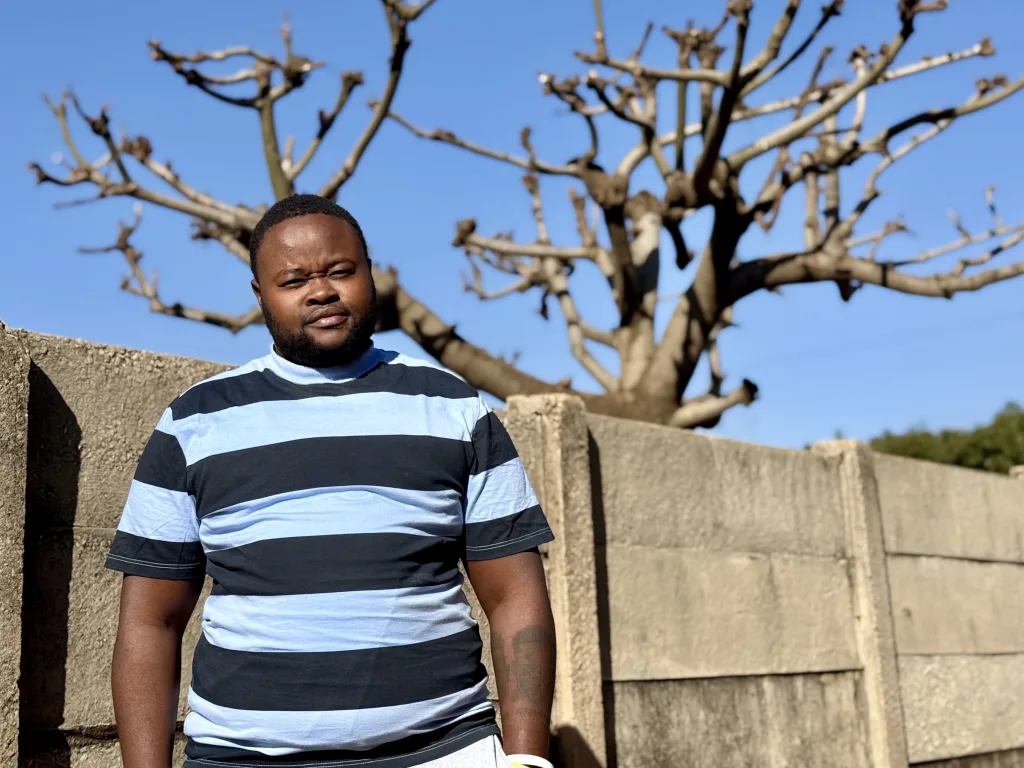
I first met Donwell Mpofu just over a year ago, at his home in Daveyton, a township east of Johannesburg. The founder and executive director of Trans Guardians Alliance, Mpofu was running late for our scheduled interview.
Apologising profusely as he arrived, he explained that he had an emergency on his hands: A lesbian asylum seeker from Zimbabwe, who had been living in Tembisa, in the east rand, had passed away.
Mpofu had contacted the father in Zimbabwe to arrange repatriation, only to be told that his child “was long dead to them”, cast out by the family because of their sexual orientation. Sighing, Mpofu, added: “We even said to him, ‘You don’t need to contribute anything. We can raise funds to transport the body to Zimbabwe.’ But he said, ‘No, no, no… I don’t want.’”
All too familiar with such situations – and the many discriminations LGBTIQ+ forced migrants face – Mpofu opened his three-bedroomed house to those in need of food, shelter and referrals for psychosocial support. “I can’t call it a safe house,” he says, humbly. “It’s just me opening my house to say, ‘Let me help people who are homeless here’.”
[Photo: Carl Collison]
With less than a handful of registered shelters for LGBTIQ+ forced migrants in South Africa, the demand across the country is great. The recent wave of Afrophobic rhetoric, violence – and the resultant forced displacements – have exacerbated this need to such an extent that what were previously considered safe houses for queer asylum seekers are no longer that safe.
Says Mpofu: “When all this Afrophobia started, [March and March supporters] once came to my centre [a crèche he owns and runs] and attacked me. So, I was afraid that, because I am well known in Daveyton, I might be putting them in danger.”
Mpofu had the safe house’s three occupants relocated – two to a church and one to “a shelter for straight people”.
Shortly after this, Mpofu received a frantic call from a family in need of shelter. He found himself left with little choice but to have them hide out in one of the rooms in his crèche.
“You only leave home when home won’t let you stay.” – Home, Waran Shire
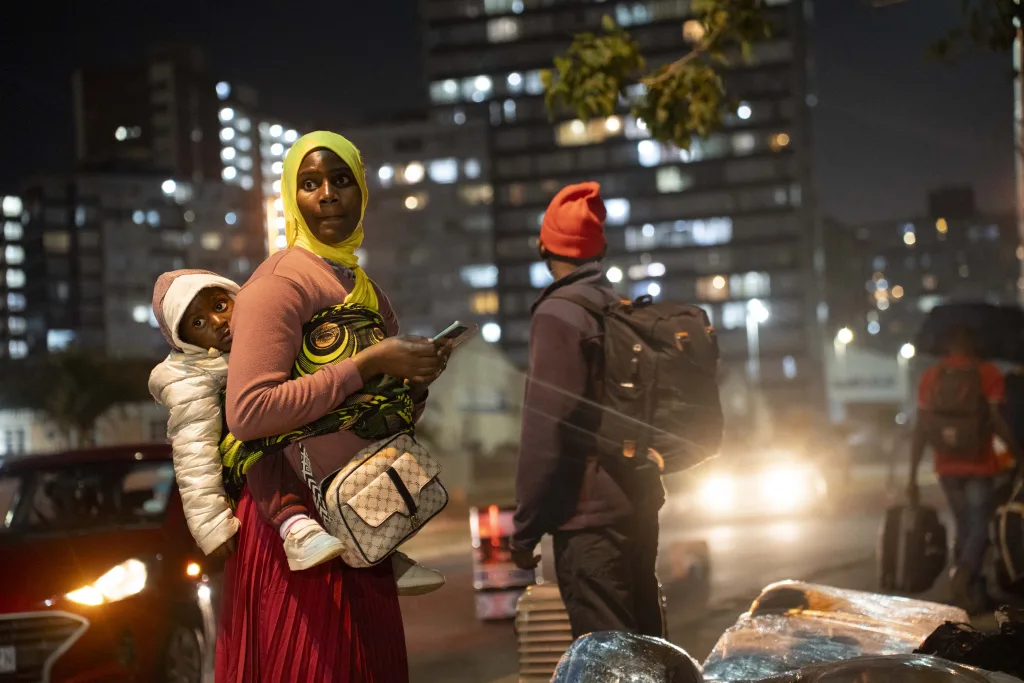
Panashe*, her partner, Mapalo*, and their eleven-year-old daughter were sound asleep when they heard the banging against the door. Their landlord, accompanied by March and March adherents, had come to evict them from both their home – and, ostensibly, the country.
“They hit the door,” Panashe said, speaking to me from the crèche classroom they were hiding out in. “They were, like, hitting the door, you understand? They were saying, ‘You guys, ah, you are stabane. You guys are makwerekwere. Go back to your country.’”
Panashe, Mapalo and their daughter fled with just their clothes. The mob stole the little other possessions they owned.
“I don’t want to lie… The situation was very, very traumatising. It was a very, very scary situation,” said Panashe, who fled Zimbabwe in 2015 after facing persecution based on her sexual orientation.
About coming face-to-face with the violence of Afrophobia, Panashe said: “We were not expecting this.”
She added, however, that there had been indications. “When we were still back at our place – before we moved to this crèche; before this whole thing – when our child came from school, she would be like, ‘At school, this person was saying, ‘Kwerekwere, you should go back, when are you going back? When are you going back to your country?’ And this comes from kids! So, it’s like the parents are spreading hatred. And the hatred is spreading even to their kids.”
In their community, Panashe and her partner also faced queerphobia. “You know,” she said softly, “some of the people in that community, they were very homophobic towards us. That’s why, when all this Afrophobia started, they put us on the top of the list. Like, ‘These people, they are not South Africans and they are lesbians.’”
The experience of, yet again, having to flee from their homes is, she said, “very, very difficult” – especially for their daughter.
“The child is very stressed,” she said. “She is really very, very stressed.”
Adding to their stress is the fact that Panashe is originally from Zimbabwe, and Mapalo from Zambia. Going back to their respective countries of birth would split their family. Says Mpofu: “So, I’m just thinking if we have to take them back to Zimbabwe or to Zambia, what is going to be their lives?”
A few weeks after I first spoke to Panashe, Mpofu had her and her family relocated from the crèche to a room in “a different location”.
Says Panashe: “It’s a bit better… just because we moved to a different location where no one knows us, you know?”
They are, however, still, not out of the proverbial woods.
“The rent for the first month was paid for,” Panashe says. “But I don’t know what’s going to happen the second month. I’m just praying for something. And the other challenge is food. We are really, really struggling. And after the situation we faced in Daveyton, it’s like, as a human being, you sleep with one eye open. You never know what’s going to happen. It’s still really stressful. And we are still living in fear.”
“Adding to what is already in the bucket”
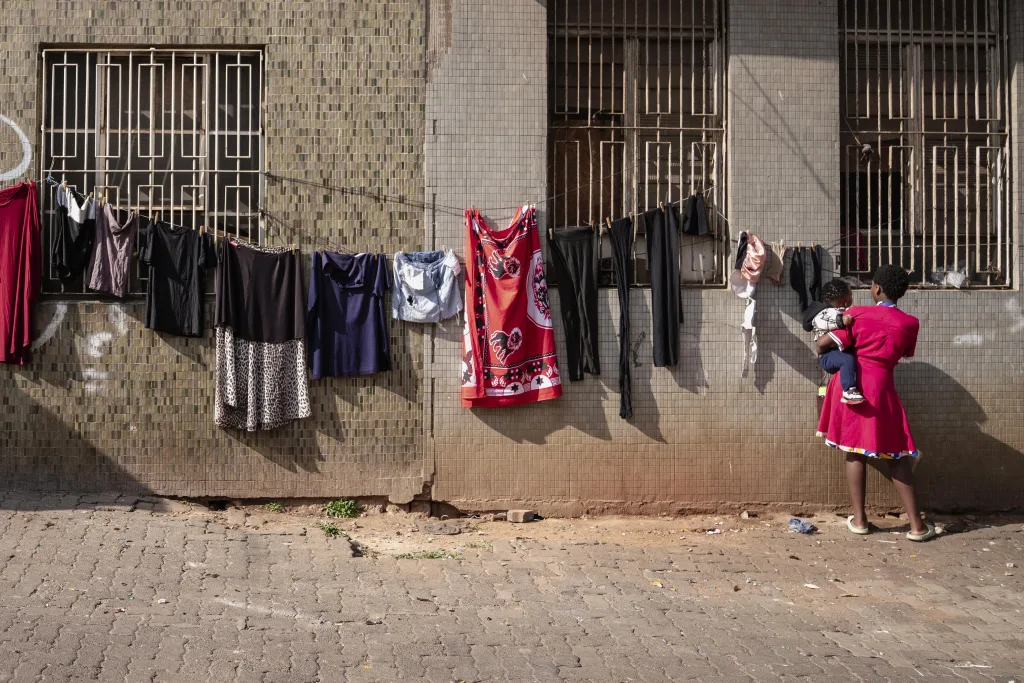
Mandy Jovial is Programmes Coordinator at queer refugee rights organisation, The Fruit Basket, which runs a safe house for queer asylum seekers on the eastern edge of Joburg city centre.
In the run-up to June 30 – March and March’s self-imposed deadline for all ‘undocumented’ African foreigners to leave the country – Jovial and her team were left with little choice but to relocate the shelter’s occupants to an area deemed safer for them.
Says Jovial: “Those we had in the safe house, we had to make a plan for them to be away from what is meant to be a safe house for them, because at some point, we noticed that the safe house is located in an area which is a hotspot for [Afrophobic] marches and stuff. So, we had to relocate the residents to a safer place – and then they returned after the 30th. As for myself, because I live beside the safe house in the same compound, I also had to leave because my safety had been compromised at some point. Until today, I haven’t gone back.”
Not returning to the compound is, she adds, “more like a precautionary measure” after her personal information was posted on social media by March and March supporters.
“I started getting threatening messages,” she says. “Someone sending me pictures of guns. Someone telling you, ‘I know where you stay. I’m coming for you.’ Those kinds of things.”
From the perspective of The Fruit Basket, Jovial says the organisation has “noticed the pressure” felt by LGBTIQ+ queer asylum seekers and migrants.
“We’ve been receiving so many calls for help, requests for shelters for queer people. Displacement is very high at the moment. It has been quite challenging,” she says, adding: “And for me, as an activist, I’ve been so drained, because people are reaching out for help, but we can’t help, unfortunately.”
For Jovial, the blame for the Afrophobia directed at undocumented forced migrants lies with the State – in particular, the Department of Home Affairs.
“The majority of [the queer migrants] are not documented, but they did not choose not to be documented. It all goes back to the systematic failure of the department, which is delaying all the processes for people to obtain documents. The process makes it not easy for, especially, a queer person to get documents.”
A 2021 study found “worrying trends” in how the Department of Home Affairs handles asylum claims based on sexual orientation and/or gender identity. The study noted that these trends “suggest that the South African state is leaving LGBTI+ asylum seekers vulnerable to deportation and future harm, while also exposing them to psychological distress, secondary trauma and potentially death”.
Says Jovial: “Before this Afrophobia became so visible and so impacting, we were fighting issues of discrimination [against] queer people – especially [against] trans and gender-diverse people. At the moment, what is happening in terms of Afrophobia, is another addition on top of what we already have to deal with. We already have so many challenges in place. Afrophobia is just adding to what is already in the bucket.”
“I don’t know where I’m going. Where I came from is disappearing. I am unwelcome. My beauty is not beauty here.” – Home, Waran Shire
A little more than a year after the father ultimately refused to bury the body of his lesbian daughter, Mpofu says: “You see, with that situation, if we have to take [queer people] back to their home countries, do you think it’s going to be safe? I don’t think so. It’s not going to be safe at all. It’s… it’s just not an option.”
* Not their real names
- If you would like to support the work of Trans Guardians Alliance, please email Donwell Mpofu at transguardiansalliance@gmail.com.