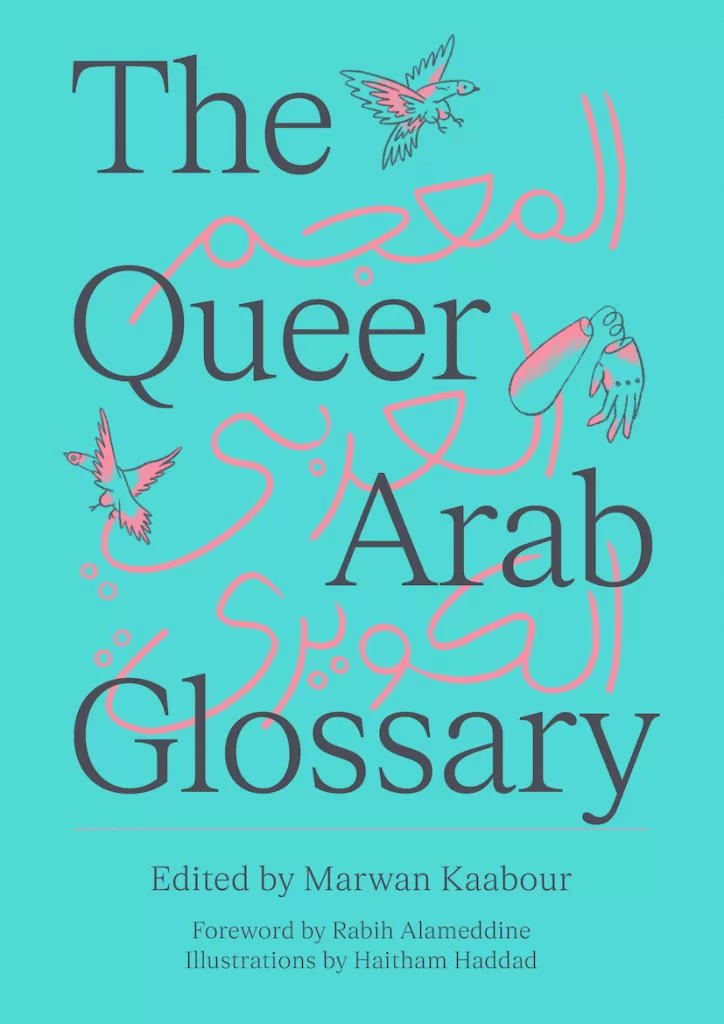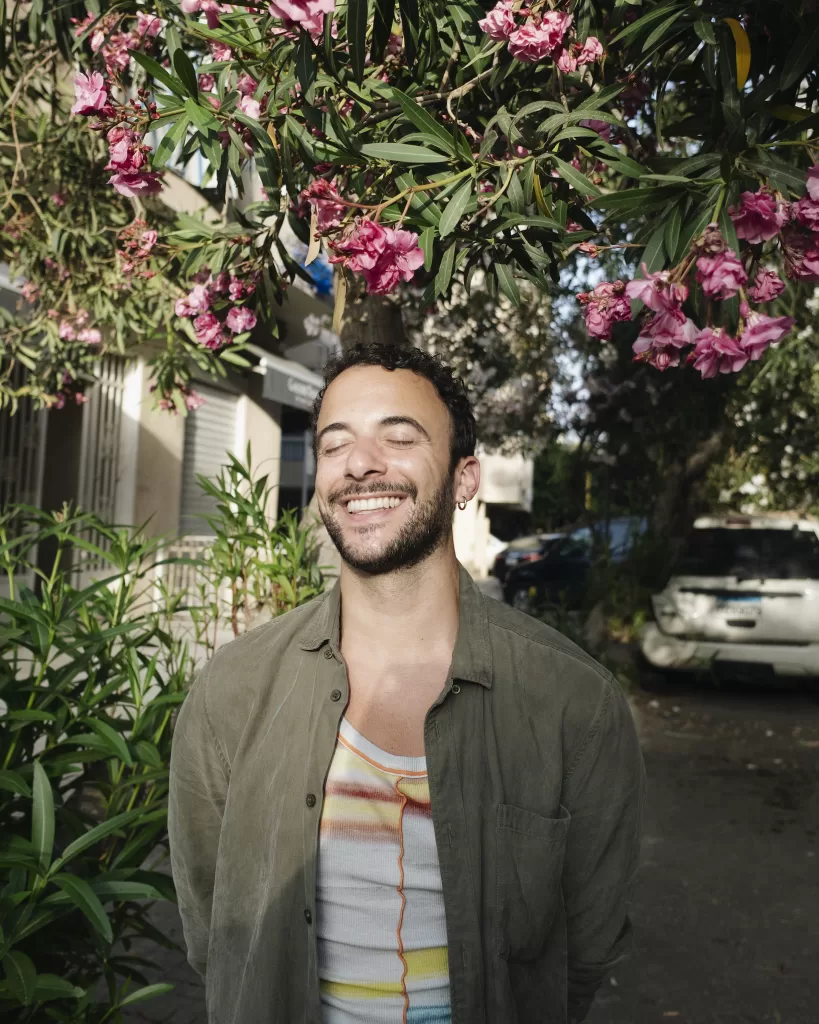
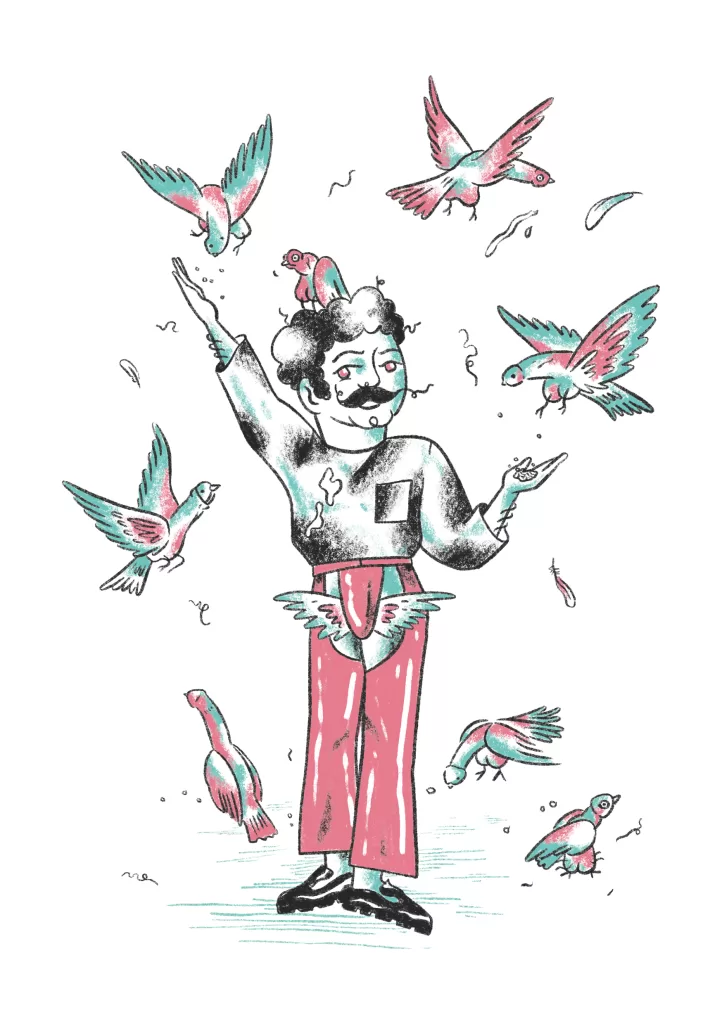
London-based, Lebanese artist and graphic designer, Marwan Kaabour refers to his book, The Queer Arab Glossary, as “a love letter” to his community. The “letter” is, however, more akin to a tome. Covering Sudanese, Egyptian, Levantine, Maghrebi, Iraqi and Gulf dialects, the book is impressive in scale, containing the definitions of more than 300 slang Arabic words used to describe queer people (some affectionate; most, derogatory). The book, which took four years to complete, also includes essays and delightful illustrations which put a playful and queer-affirming spin on some of the often-offensive terms. In this interview with Carl Collison, Kaabour speaks, among other things, about the reasons behind tackling this ambitious project, the patriarchy inherent in language, and his active inclusion of a section of the global queer community so often “ignored”.
Carl Collison (CC): I found it telling – and kind of amusing – when I opened the Sudanese dialect section of the book and the very first entry was ‘Awlād Mīkī’ (“Mickey Mouse kids”), which basically alludes to the perception that queerness in Africa is as a result of ‘Western influence’. That it’s a Western import. But then, you also have lots of entries which date back to pre-colonial days. There’s the beautiful essay, A Rich Constellation of Identities, by Saqer AlMarri, where they write about a manuscript that dates back to the 1300s in which reference is made to what we would today call intersex people. And so there’s a kind of contradiction, in a way, in how queerness is seen across the Arab world. What other contradictions or differences did you notice in your research?
Marwan Kaabour (MK): I feel like if I need to talk about the book, I also just need to talk about Takweer [LINK], which is the project that gave birth to the book. Takweer is this platform that I created in 2019, out of frustration with these things that you touched on: the idea that we hear in our own…Arab context that queerness is a Western import. And the Western perspective that us Arabs are people who are born homophobic and sexist and backward and barbarians and all of that. So Takweer…and the book operates in the same way: it’s simply us celebrating our own culture with queerness in mind. But it’s also to debunk these myths that queerness is a Western import – or that we are incapable of embracing queer people. But the book is a survey of the linguistic landscape around queerness. And by survey, I mean everything. So it’s not just the good words or the politically correct words, it’s all of the words.
So, of course, there [are] going to be many, many contradictions when you look at this entire range. But it is correct to mention that if queerness is indeed a Western import, then how come Arab communities…have been talking about it and documenting it [for] as long as these communities have existed? You touched on Saqer Almarri’s essay that specifically dissects the root of the word ‘khuntha’ or ‘khanith’, which is the very old school, historic Islamic term to refer to someone who is, um, intersex or gender ambiguous or effeminate. The definitions really vary. So clearly, we’ve been there from the beginning. So obviously, queerness is not a Western import. The way we are dealing with it is what has changed over time.
And this is not to simplify things and say things used to be good, and now they’re bad, because it’s more complicated than that. It’s just that before the colonial era, in general, queer people existed and were embraced in various ways. [They] also faced challenges, but they were embraced in different parts of the community.
And if you go through Takweer…you will see me every now and then bringing a new story that explains how people who we, [in] today’s time, call ‘queer’, have existed in the past under different names and different definitions. And then the colonial era came to introduce Victorian codes of ethics, conservative morality – particularly by the British and the French – and laws to criminalise prostitution, homosexuality, sodomy, etc. And then, in the post-colonial era, we are still dealing with the consequences of these laws, to the degree that the Arab communities themselves believe that this is true; that what the colonists came and introduced to our culture is actually who we are.
So we’ve internalised the hate that was imposed on us…So, what this book tries to do, actually, is to challenge [this]…But it also, very importantly, presents a challenge to the mainstream queer discourse to say, it is not as singular as you’re making out to be. We have different ways of expressing our queerness and our people have different ways of dealing with it.
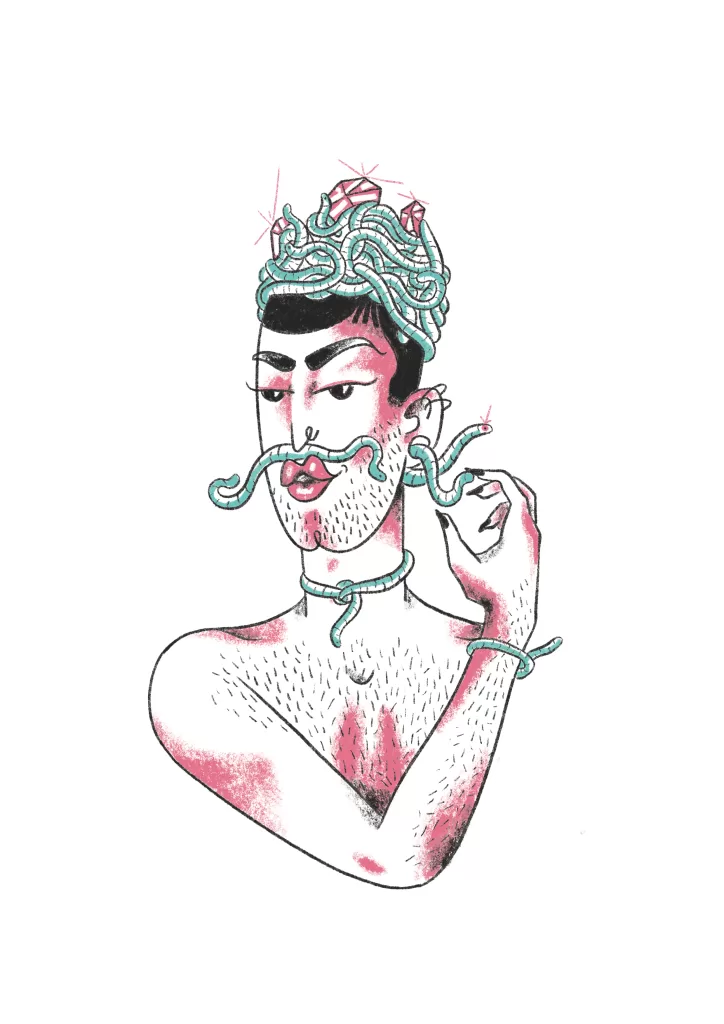
CC:I also noticed in the book…the vast difference in the number of terms referring to queer men and cisgendered queer women. And there are also so many more derogatory terms for the more effeminate, bottom-perceived queer man – and that the terms for the [more masculine-resenting queer] men are kind of almost…not reverential, but more respectful. To me, it really highlighted the patriarchy in language…
MK: The queer community is like a miniature version of regular society, and the patriarchy and the misogyny that permeates general society makes its way into the queer community. Now, obviously, as you’ve rightly noted, most of the words in the book are derogatory, because we are still not at a point where we have developed such a vast vocabulary between members of the community to talk about our experience, which is what I hope my book tries to trigger. But how do you demean someone? How do you insult someone in this context? In the context of queer people, specifically in the Arab world, but I think this applies to everyone. When it comes to queer men, you try to compare them to women, because that apparently demeans or belittles [them] or takes away from their masculinity, which is something that should be celebrated: the virile, masculine, you know, like, insatiable man, who, even historically, even in a legislative kind of way, sometimes faces less consequences than the bottom.
Now, with queer women, there [are] two parts to it. The words that do exist always bring the queer women back to the man. As in, she’s…’mistarjila’, which means she is ‘like a man’. She is a ‘boya’, which is the feminisation of the word ‘boy’. She is ‘mistazilmé’…a colloquial word for ‘man’. So, it’s all to say that she is acting this way, because she is like a man, not because she is a woman, a queer woman who has exercised her right to love and do whatever she wants with her body, and to express her sexuality, and have a specific kind of sexual relations. So, that’s the first part.
The second part is how little of these words exist. And it’s the other facet of misogyny, which doesn’t even give value or seriousness to a woman’s sexuality and sex lives. So, we’re not going to even acknowledge her choices, or her life. And when we do, we are going to say it’s like the man.
There are exceptions, some beautiful exceptions, but they are very [few]. And what I tried to do is to address this lack of balance by commissioning texts in the essay section that try to centre a woman’s sex and sexuality and body, written by queer women.
CC:Let’s talk about the African followers of Takweer. There is a lot of anti-queer rhetoric sweeping through the African continent at the moment. In their comments and engagements with you, do they talk about the need to have their identities written about or acknowledged? Is that something that you’ve noticed in their engagement with you?
MK: Absolutely. Look, I mean…with Takweer and with the book, it’s been a massively educational journey for me because, you know, I need to acknowledge my positionality as a cis gay man from the Levant area of the Arab world.[Because] even though we sometimes look at the Arab world as this monolith, it’s made up of massively diverse and often contradictory communities, with contradictory definitions of what it means to be Arab. And that is something that, again, I address in my intro. So, when I attempted to create a platform like Takweer to talk about the queer Arab identity, I mustlook at all of its facets and not just the ones that usually make it into the media, which are usually Middle Eastern and Egyptian, to be quite frank.
So, that has forced me to step out of my, you know, comfort zone and look beyond what I know, and engage with our queer siblings across the African continent as well. And I have to give gratitude to the members of the community, because, you know, I didn’t grow up with Moroccan culture, for example. But it’s the followers who bring to my attention stories that I need to tell. So, I provided a channel for these stories to be told, but then it’s the community and the followers themselves who feed into it and tell me, ‘Look, you should look at the singer who was, you know, gender non-conforming in turn of the century Morocco’, for example. And they broaden my understanding of what it means to be Arab, because to many of us, Arab is not an easy identity to adopt.
In Morocco, there are people who identify as Amazigh, not just Arab, or people who identify as African and Arab at the same time. And we have to also acknowledge the anti-African racism, amongst African Arabs themselves. Like we see a lot [of] in Egypt. And so there’s a lot of complexities and a lot of sensitivities, and there’s no way to address them all in the amount that they deserve. But what I attempt to do is I try to open up these dialogues. So, to kind of remove the toxicity of the conversation and to try and bring people back into the fold…
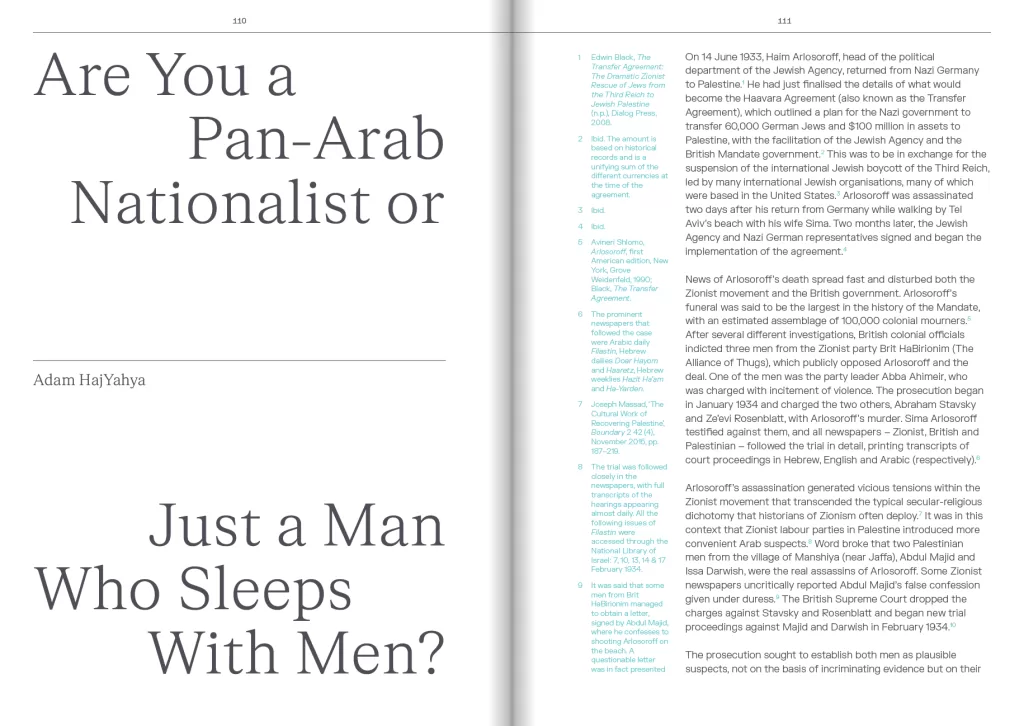
CC: I love the inclusive nature of that approach. It’s kind of ‘queering’ knowledge production…
MK: Oh, fully! I think I’m quite lucky that I don’t come from a research or academic background. I’m a graphic designer. That’s my background. And I think it liberates me from a lot of the shackles of academia and research. So, I could do it as I please, essentially.
And you should see, at a few book events I’ve had recently, specifically people from Sudan or from North Africa will come up to me so emotional that I included them in the book; that there’s a Sudanese section. And I’m like, imagine I put out a book that claims to represent the entirety of the Arabic-speaking communities and just ignore a whole chunk of it.
But it becomes so normalised to forget that part of the Arab world. It’s become so normal, that it seems like a surprise or like a privilege to be included. So, I’m trying to also address the Arab community’s own bias against their African siblings.
CC: What we’re seeing across the continent now is increased anti-queer rhetoric that is being supported and funded by conservative Christian players in the West. Have any Takweer followers or subscribers, or any other people who’ve contributed to the book, mentioned increased queerphobia based on Islamic religious beliefs?
MK: Yeah, it applies to both in the Arab world…I would say that in the last five years, there’s been a rise in homophobic rhetoric and I think it’s down to a few reasons. Because many of us have come up to the surface. We were operating in the underground, and there’s safety and freedom in the underground. But, you know, there’s also a desire to be included in general society. But when you poke your head above the surface, that also puts a target on you. So, it’s almost expected and natural, unfortunately, that these attacks will begin, especially when you tie them to politics of visibility.
And the second part is the fact that the world is heading, very surely, towards right-wing fascism. And the kind of…homophobic or transphobic rhetoric that someone like Donald Trump might say in the US will trickle down and find its way into our own right-wing communities and [be] adopted by them…We don’t exist in a vacuum. We are all connected in these ways.
My issue is not that I only have to battle my authorities to claim my rights, but I also have to deal with international politics that are standing in my way. Because now a right-wing politician in Lebanon is parroting anti-trans rhetoric that I’m seeing someone like JK Rowling spewing in Scotland.
CC: I want to come back to your Takweer followers, but particularly those in African regions. What are some of the more noteworthy or what are some of the things that have stood out for you in terms of their comments? What are they feeling?
MK: It’s difficult to answer because…I wouldn’t say there’s a difference in the way they interact with me, not at all. But [there is] a thirst and a demand to be included. I think the discourse is usually quite dominated by specific parts of the Arab community. So, what Arab African followers do is demand their space and demand…(pauses slightly)…rightfully demand that they are included in the narrative.
They want to be seen and not erased, yet again, because some people across the African continent also have this identity conflict. Am I Arab or am I African? I’m neither included in African discourse and the Arabs don’t really…they ignore me.
So, I think there’s a frustration out of erasure and a clear demand to be included. I think that to me is the main lesson that I’ve learned specifically from my African followers.
CC: What are your hopes for the book, and for Takweer and for the queer Arab community generally?
MK: For the book specifically, I said it on multiple occasions, but it’s truly a love letter to my community, before it’s serving as a weapon to debunk or to fight [with]. It’s an acknowledgement of…you know, when you sit with your queer friends and you share these stories and kinds of myths that you heard or this folk tale or these words, these jokes that we share between us, the joy that exists [in] the conversations that we have. This book and Takweer is an attempt to bring that joy to the entirety of the community.
So, I would like for this book to be a source of joy and provide someone with a sense of belonging and safety that we have existed in history, that we continue to exist…We don’t have easily accessible reference books to refer to as queer people. You have academic papers or you have gossip magazines…but there’s no in-between…[a] book that you can read and enjoy and just feel…reflected in. So, I hope this book is…one of hopefully many references that could start to tell our story. I think that’s the first thing.
The second thing is I would like it to be a challenge to mainstream queer discourse that is attempting to unify and present a very singular understanding of what it is to be queer. I want to break that down and complicate it.
And then, on a more personal note…I keep saying the book is the first realised project to come out of Takweer. Because what I’m planning on doing is to follow it up with projects…of different types of media that try to continue to tell the story, whether it’s a documentary or an exhibition or another book. There’s a wealth of knowledge that has been relegated to footnotes. I would like to bring it into the main body.