By Vuyo Ngcofe
I grew up loving igwijo (Xhosa cultural songs). For me, it has always been more than just singing. It is the sound of belonging, the sound of community witnessing young men as they return from initiation school and step into recognised manhood. It is a sound that carries history, pride, and continuity. Yet, as a transgender Xhosa man navigating cultural spaces in my community, igwijo has also been the sound of longing; a reminder of both my desire to belong and the barriers that still exist.
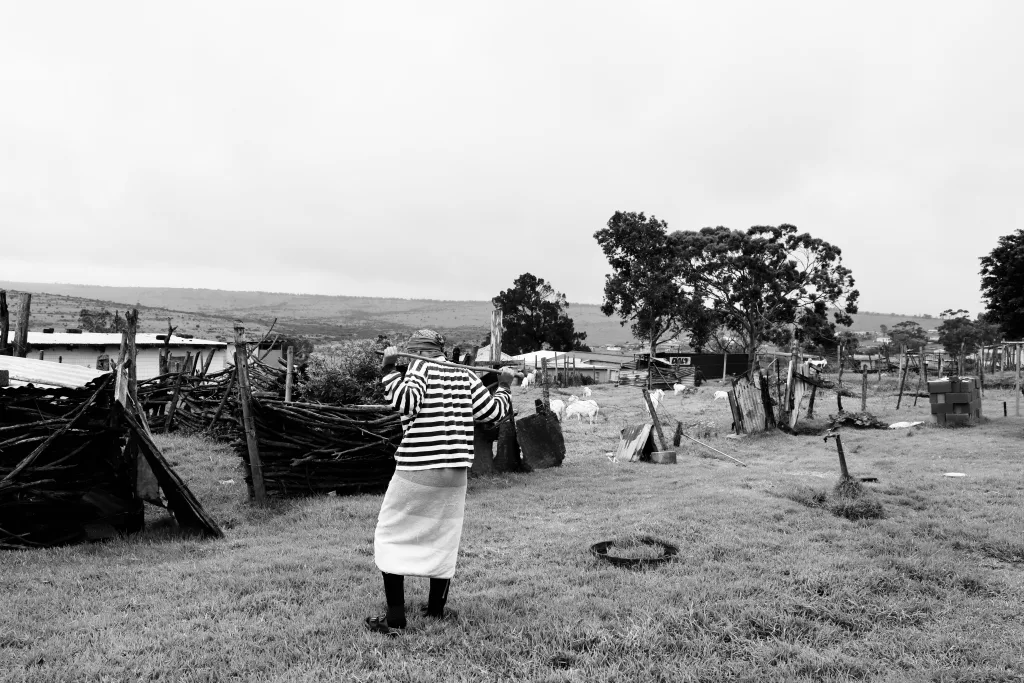
I remember the morning my twin brother and I were brought home from initiation school during our umgidi (celebration for our return from initiation school). The yard was still covered in early morning mist, as if it was just beginning to wake up. People were already gathered, singing with excitement and pride. Under the blanket – phantsi kwe ragi – I could hear the powerful voices rising before the sun. In that moment, I felt something I can only describe as freedom. I wanted to join them. I wanted to sing. So, I began to sing. Softly.
An older cousin quickly stopped me. He reminded me that I could not sing while still under the blanket. That I needed to cover myself and respect the proceedings. In that moment, I learned that even joy had rules. Respect came first. Covering myself came first. Disappearing into what was expected of me came first. And so, I learned to silence parts of myself in order to participate.
Every December after that, I continued to attend imigidi for other young men in my community. These were spaces I loved deeply, but they were also spaces where I was never fully allowed to be myself. I was constantly told that because I was seen as a girl, I needed to wear skirts. Still, I went. I would wear my pants underneath my mother’s large skirts or aprons, negotiating between survival and self-expression. I sat with the girls and sang with them, but internally I always felt my voice belonged somewhere else – and on the other side of the yard.
In 2024, culture confronted me again at the doorway of another umgidi. This time, it came through the voice of the mother of the household hosting the ceremony. She spoke firmly; carrying the authority of generations. She looked at my pants and told me I could not enter dressed like that. She said I had to wear a skirt because I was a girl.
To be honest, I was not angry with her. I understood that she was protecting isiko (tradition); upholding the order she had inherited long before she ever met me. She was speaking a truth that had been given to her. But it was not my truth.
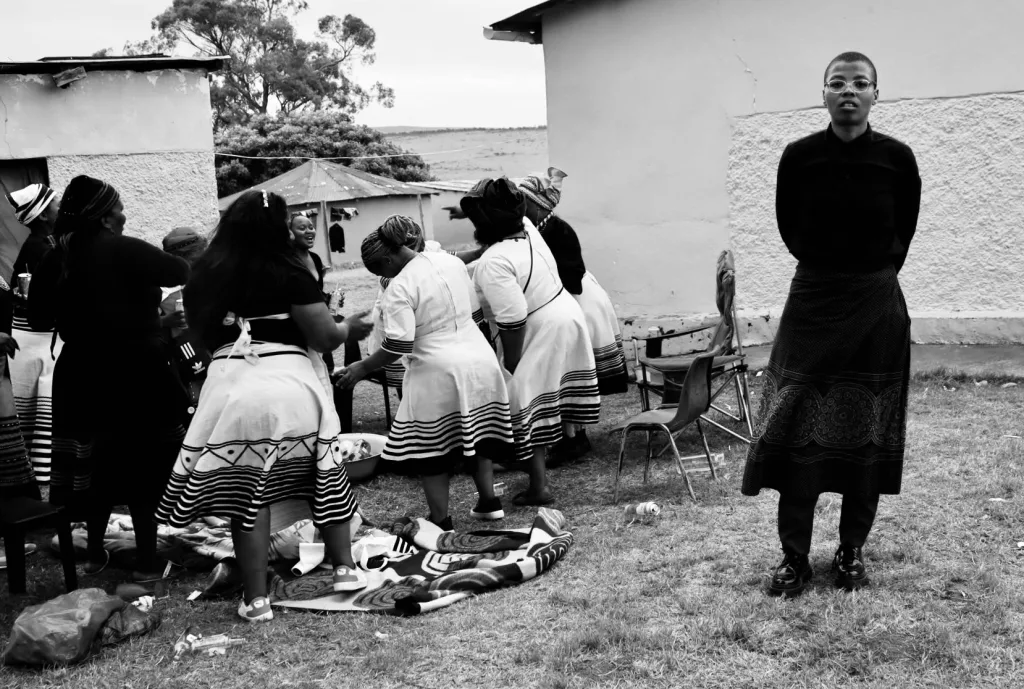
Still, a skirt was placed over my resistance like a quiet agreement with survival. I wore it. Once again, I sat with the girls; my body present, but my spirit feeling distant and displaced. That day, I realised that my struggle to be recognised as a man in my own community would not be resolved in a single December.
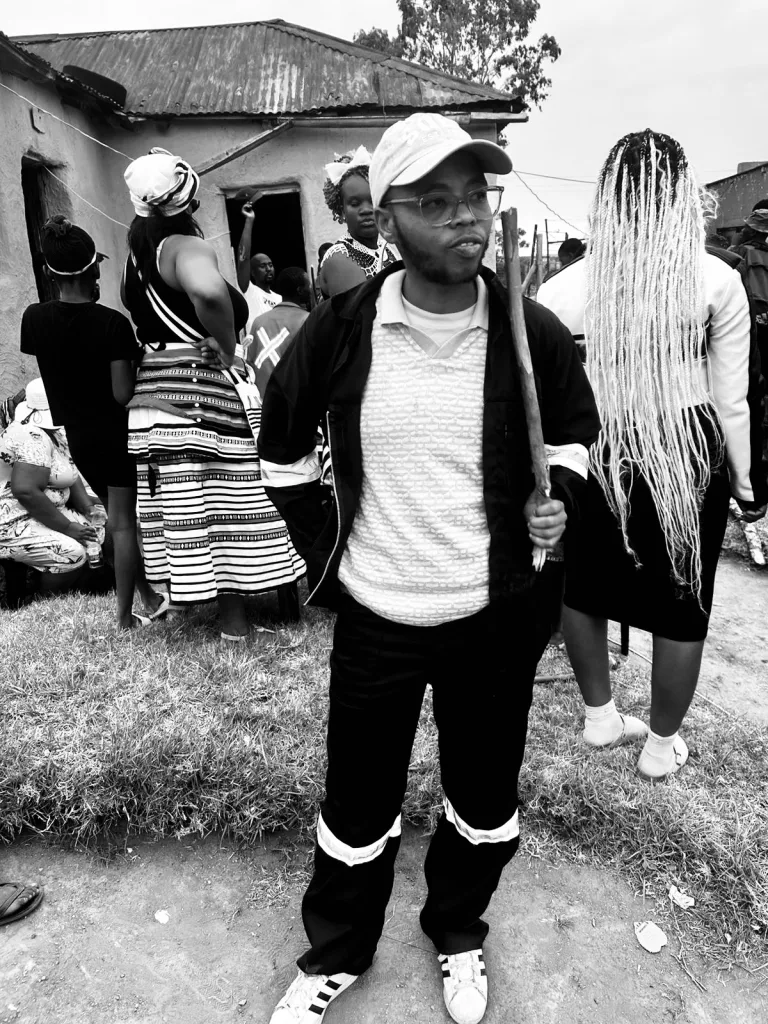
Last December, something shifted within me. I returned home determined to stop bending myself to fit expectations that denied my identity. I bought my first navy-blue overalls, which is named uNontsebenzo. Not just clothing, but a symbol of courage and self-commitment. I told my mother I would no longer wear skirts when attending imigidi. To my surprise, she accepted this without resistance. At that moment, I felt a deep release. As if something ancient within me had finally been allowed to breathe.
Soon after, my older brother asked me to accompany him to umgidi. “Khawuleza unxibe i ovaroli yakho sizohamba,” he said. (“Quickly, put on your overalls, so that we can go.”) There was no hesitation, no correction, no questioning. That simple statement affirmed me in a profound way. I dressed quickly, pulling my overalls over years of doubt and carrying my jacket as a sign of respect, because in our culture men show respect at umgidi by wearing a jacket. As a man myself, I wanted to honour that.
Walking beside him, I did not feel like I was borrowing manhood. I felt that I was finally inside it. I sang loudly – not to prove anything, but because joy had finally found space in my lungs. When he greeted other men, I stood close enough to feel the warmth of belonging. I believed that he saw me. I even began to hope that perhaps others did, too.
However, when we entered the house, the space divided itself as it always had. Men sat on one side and women on the other. I chose to sit on the floor beside my brothers, trying not to disturb what felt like a fragile miracle. Then I was told quietly that I could not sit there. I was instructed to go and sit with my sister instead.
At that moment, I felt myself shrink again. I felt small enough to fit back into every skirt I had ever forced over my truth. I wanted to ask whether I had only been recognised as a brother while we were walking on the road, far from the eyes of the community. I wondered if my manhood was only acceptable in private spaces, but not in public cultural gatherings where tradition held greater authority. The room suddenly felt heavy with watching eyes.
Tradition stood taller than my courage. I stood up slowly, trying to hold onto my dignity. I could not sit with the women because my spirit had already left that space long ago. Instead, I walked outside and stood alone.The singing went on without me. Once again, culture had taken my voice.
Yet, despite these experiences, my love for igwijo remains. It continues to call me back into cultural spaces, even when those spaces struggle to make room for who I am. Navigating culture as a trans man means constantly negotiating respect for tradition while also claiming my right to exist authentically. It means understanding that recognition may come slowly, unevenly, and, sometimes, painfully.
Still, I continue to sing emigidini. Sometimes with others; sometimes alone. Believing that one day my voice will not have to choose between culture and truth.
Vuyo Ngcofe is a transgender man and interdisciplinary visual artist. He is the founder of Trans Conversations, a trans rights organisation in the Eastern Cape. Vuyo’s work engages questions of gender, culture and belonging. Through his work, he explores the intersections of trans masculinity and Xhosa identity, challenging rigid understandings of manhood within traditional and contrary contexts.