[Photo: Ihsaan Haffejee]
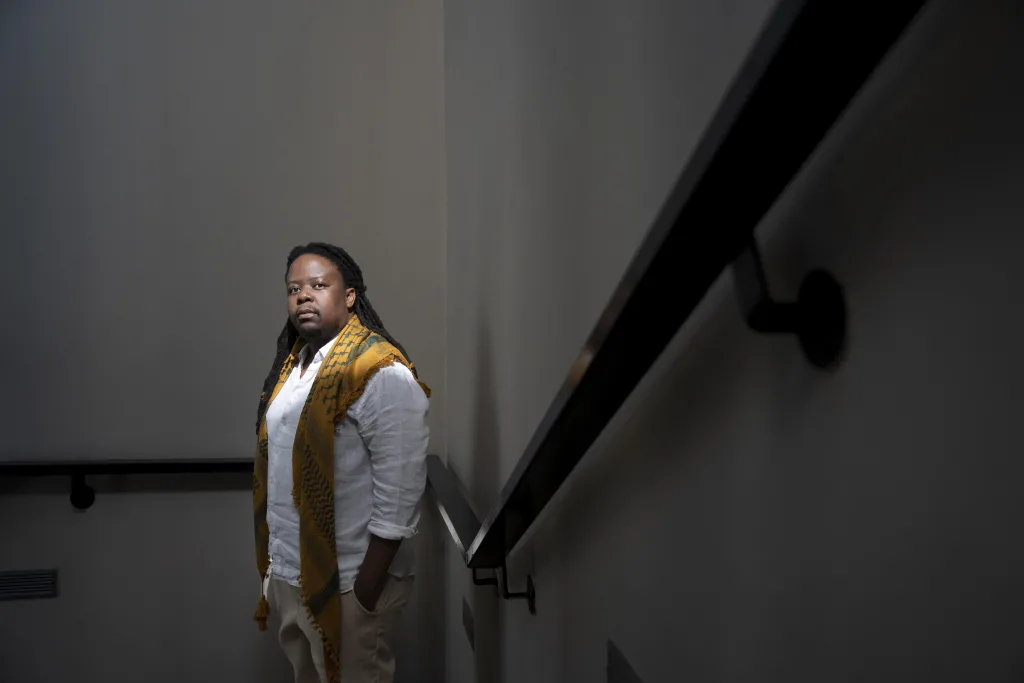
In this, the first instalment of our three-part series looking into the effects of the March and March movement on African LGBTIQA+ forced migrants and asylum seekers living in South Africa, Carl Collison spoke to queer rights activist, Sibonelo Ncanana-Trower.
Ncanana-Trower – who is currently serving as OUT LGBT Well-being’s Human Rights Officer, and is Co-chairperson of South Africa’s National Task Team on SOGIESC Matters – spoke to Beyond the Margins in his personal capacity.
A “human rights defender and community leader” with years of experience under his belt, Ncanana-Trower shared how the current wave of Afrophobia sweeping across South Africa has revealed the “eye-opening” and “shocking” reality that even within the country’s human rights sector, there are those who “quite loudly” espouse Afrophobic views.
Carl Collison (CC): Since the advent of the March and March movement, what have you noticed are some of the impacts on African queer forced migrants and asylum seekers living in South Africa?
Sibonelo Ncanana-Trower (SN): I think, for me, what I’ve noticed is the very loud silence of South African queer organisations and activists. They’ve been very silent, but also quite loud in their private capacities in supporting the March and March and [Operation] Dudula movements. It has been shocking [to] see people you think are on the left, or who you think will be supporting vulnerable groups – especially queer refugees and asylum seekers – but are the opposite of what you had expected. I think it’s a wake-up call for us not to assume that people who we sit in the room with think the same way we think. And it’s a lot of activists who have been vocal – to the extent that they don’t care whether people are here legally or not.
But that’s not the point. I think if you have worked with migrants and asylum seekers, you would understand how hard it is for them to acquire documentation. And that it’s not their fault that most of them are not documented. It is [the Department of] Home Affairs’ fault. And for those who have been lucky [enought] to get asylum seeker status, they have been seeking refugee status for years and not been given it. So, they keep on going every six months to renew [their documentation]. And currently what is happening is that Home Affairs is just rejecting everyone. Whether you are gay, whether you are trans, whether you’re an activist… you are just getting rejected. So, for me, it is funny, in a way, that somebody who, for example, fights for sex workers – who are illegal in South Africa – sees it fit to chase other so-called ‘illegal’ people out of South Africa. I’m dumbstruck when this happens.
CC: The organisation, PFSAQ (Parents, Families & Friends of South African Queers), recently put out a statement pointing out the same thing. The statement speaks about how “heartbreaking [it is] reading statements from some within the LGBTIQ+ community expressing little concern for what foreign nationals are experiencing”…
SN: Yes, precisely. For example, a few weeks ago, there was a meeting of queer rights organisations hosted by The Fruit Basket centered around the Nali’Themba Project [a project co-funded by the European Union Delegation to South Africa, in collaboration with COSPE Southern Africa and Gender DynamiX]. The programme itself aims to respond to emergency situations faced by queer people or activists… [and] also some asylum seekers. We held the meeting to review the implementation of the project, and also to look into how asylum seekers could be assisted. So, one would assume that people invited to the meeting were people who either were beneficiaries or are people who have referred people to the Nali’Themba programme. But what happened in the meeting I found quite sad: that in this space we would be talking about ‘legal’ and ‘illegal’ people – especially because it was a queer space. I understand maybe in other spaces where they might not be affected [by discrimination] the same way as queer folks [are], but in a queer space that we find ourselves talking about ‘legals’ and ‘illegals’? To me, it was very sad.
But what was really ironic about that meeting is that it was a South African who did not have documentation. This is somebody who was born in South Africa, but was housed by The Fruit Basket [in the organisation’s safehouse] because Home Affairs effed up their documentation. So, that was the ironic part: that everybody in the room was documented, including asylum seekers. However, the only person that was undocumented was a South African. Which just shows you how Home Affairs affects people’s lives. And that it’s not only foreign nationals. It affects even South Africans.
That meeting was a real eye-opener. For example, I never thought I would see a black, trans woman – who knows how hard it is to get documented as a trans person; the hurdles that trans people have to jump through at Home Affairs to be given the right gender marker – still supporting the calls for illegal immigrants to leave. For me, it is shocking. But I think I’m becoming less shocked now. Because if you go on Facebook, people are open about this. Very few are not open or maybe support it in silence. But many people in the [queer activist] space are supporting this movement openly. So much so that I’ve questioned myself. Like, maybe I live in a bubble where I don’t see reality in the same light as they see it. But every time I ask myself that, I look at the work I do with queer asylum seekers and the difficulties they go through every day. And I see that, no, I don’t live in a bubble.
Nobody wants to leave their home. Nobody wants to leave their home country. Nobody wants to leave their culture. Nobody wants to leave the markets that sell the food that they love. Nobody wants to leave that and come to a country with no job, no place to sleep, and not knowing your future. So, for me, it’s quite difficult to understand why you would think the person is coming here just for fun – as if it’s a vacation.
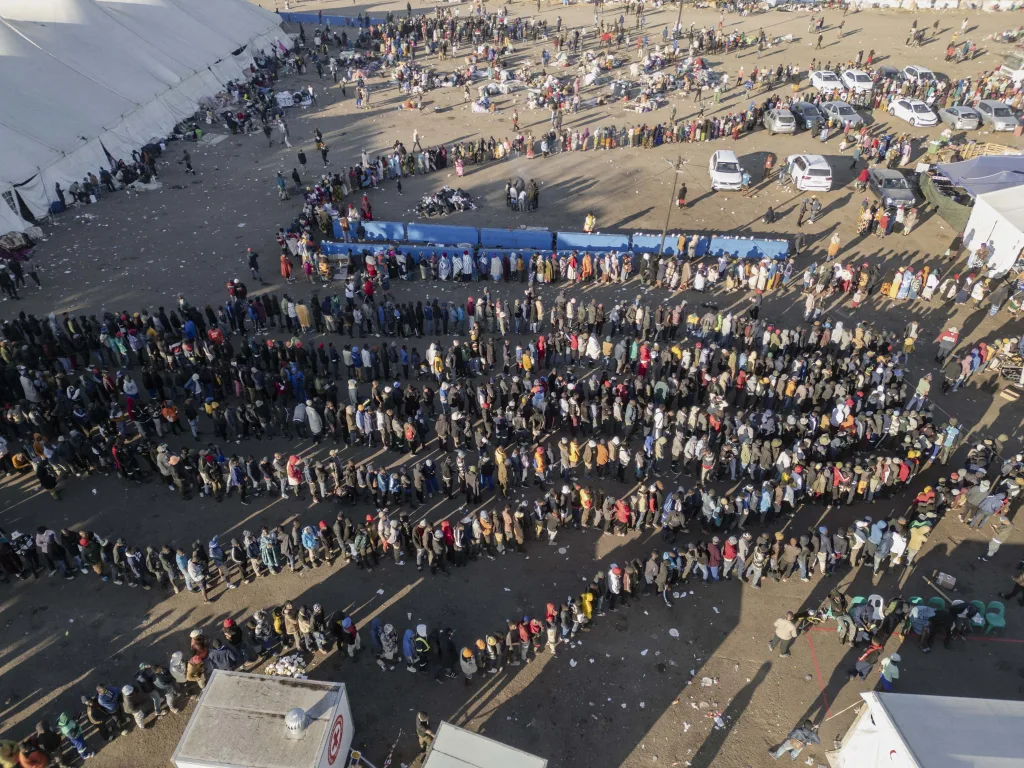
CC: Someone I interviewed recently said that queer Africans were “top of the list” of people to target during these Afrophobic attacks. Do you think queer people are more vulnerable to Afrophobia than heterosexual or cisgendered forced migrants?
SN: I do think they are more vulnerable. I’ll make an example of one of our clients. I won’t mention her name, so let’s call her ‘Rose’. She is transgender and of Somalian descent. She came to South Africa because her uncle had brought her to South Africa to work in a shop. But then the uncle found out that the person is queer and then kidnapped the person, put them in a room – a backroom – for over a week without giving them food or water. She then managed to escape when the cleaner heard her locked up in a room and crying. The cleaner then gave her R20 and said, ‘Please run, because your uncle is planning to harm you’. So, what happens in Somalian communities, they have courts that operate even in South Africa. So, the fear was that the court was going to then find her guilty and then [punish] her. This happened in the Eastern Cape. We had to then try and get the person to Johannesburg.
When she got to Johannesburg, she was also stopped by police. The police wanted money from her. They threatened that they are going to take her, because she is trans, to the Somalian groups that will deal with her. Luckily, after we were trying to call Lawyers for Human Rights and so on, I think the police got quite afraid, and let her go. She then had to live in Johannesburg away from her family.
What I’m trying to point out is she couldn’t go back to a Somalian group and ask for help, because they don’t allow you to be homosexual, trans, or any form of queerness. So, she was even afraid of their own people. She couldn’t shop openly. She couldn’t go to town like anybody else. She would have to wear a scarf – a mask, essentially – so that nobody would recognise her. So, the person could not go to her own group of people, other Somalian people, to find refuge, or to get a job, or to try and survive.
And, on top of that, trying to get that person out of the country was very difficult. Even trying to get them documented. There was a point in 2024 where I said, ‘You know what, Rose, let’s stop getting you documented. It’s not working. We have tried everything. Let’s maybe focus on getting you out of the country.’ Luckily, the Canadian government came in to assist when we reached out to them and she left a month ago. But this case was going on from 2022. The person only left a month ago – in 2026. The person was undocumented – couldn’t be documented – because the process made it impossible to try and document the person.
And this is just one person. A lot of others, particularly those from North Africa, East Africa – Somalia, Sudan – and [DRC] Congo find themselves really not being able to go back to their group of other refugee and asylum seekers.
But also, if you look at the plans that are being made by other asylum and refugee groups or organisations to try and transport people back to their country, or to provide shelter or food, the queer community is not included in those plans. Through [queer rights activist] Sikhander Coopoo, from the Eastern Cape, we have tried to see if these groupings have a plan for queer people. None of them had a plan for queer people. So, let me just put it this way: It’s worse if you’re queer. You don’t have a place to run to.
What also came out of the Nali’Themba meeting is that a few people have left and gone back to their countries, or their neighbouring countries. For example, a few Ugandans have left and went to Kenya. And you know what the situation in Kenya is like. They have to be put in camps. They will live a horrible life in those camps; probably even die in those camps, like many other queer people have died in those camps. Even those who have died, they have reached out [to us] before. Throughout the years, Carl, we have seen that the person reaches out today, the next week the person is found dead. That is the reality of the camps in Kenya.
Also, when we reached out to neighbouring countries, for example Botswana, I found that it’s also the same situation: if you are a refugee or an asylum seeker, you are then put in a refugee camp. And that is not a place where you would want to send people. So, a lot of queer Ugandan people have gone to Kenya. And I’m really not sure they’ll make it to next month, or next year, in that place.
CC: If you could speak to someone who is queer – and also maybe an activist – but supports the views espoused by Afrophobic movements, what would you say to them to try and make them see things differently?
SN: It’s such a difficult one. I think it’s something that we as activists take for granted: thinking that everybody is on the same page – especially as queer people or queer activists. My assumption or my thinking is that they would understand the struggles of asylum seekers, especially queer asylum seekers and refugees. But I would try and remind them where we come from, and how we struggled to get to where we are. As gay men in South Africa, we were once illegal at some point. So, the issue of legality and illegality should also be seen through that lens.
I would plead with them to remind themselves how much sweat, blood and lives it took for us to get here, so that they do not make the same mistakes other people did in prosecuting us for simply being us. And for them to have empathy, to have an understanding, and maybe sit down with an asylum seeker who might have had challenges with getting documented and hear their story before judging. Because, I tell you, nobody wants to be undocumented. It is the system which is failing people.
They should look into the mirror, and take time out and think. It’s easy to hate. It’s easy to hate when you are in a better position than someone else. So, yeah, it’s just for people to think; think before they hate.