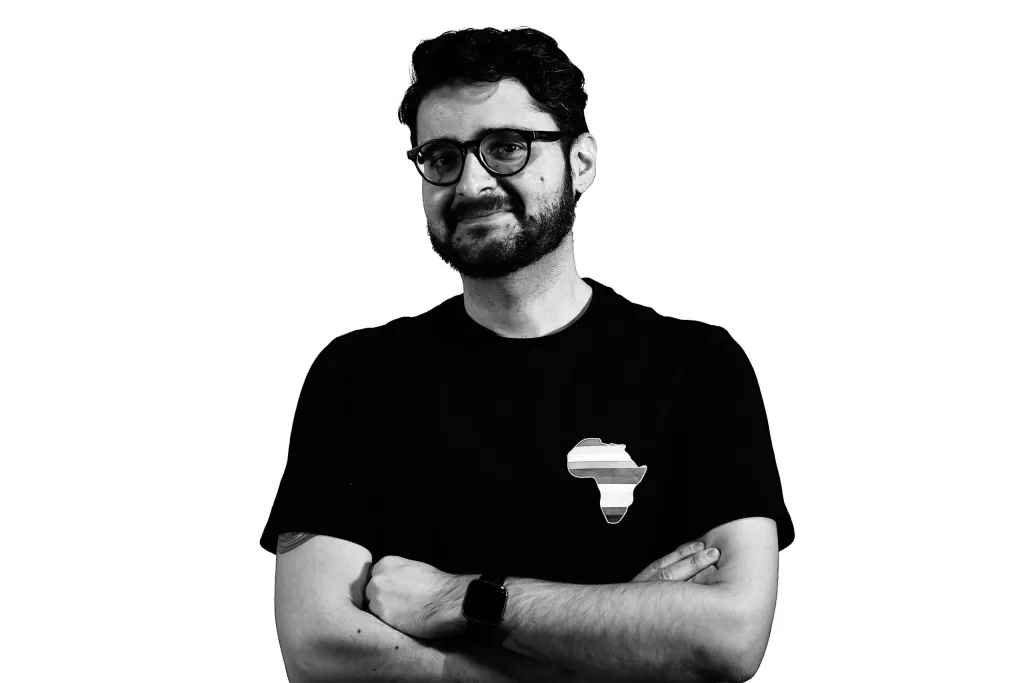
In the second in Beyond the Margins’ In Conversation series, Caio de Araújo speaks to three writers and queer rights activists – Unoma Azuah, Kevin Mwachiro, and Brian Pellot – all of whom have put together groundbreaking anthologies centering the nuanced lived experiences of queer persons across Africa.
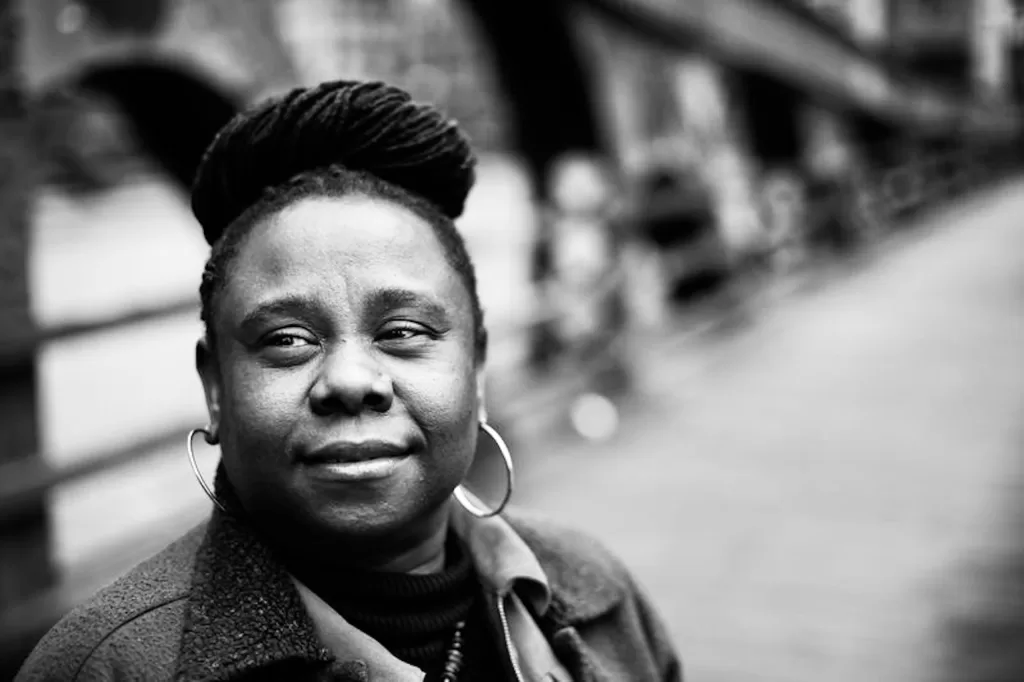
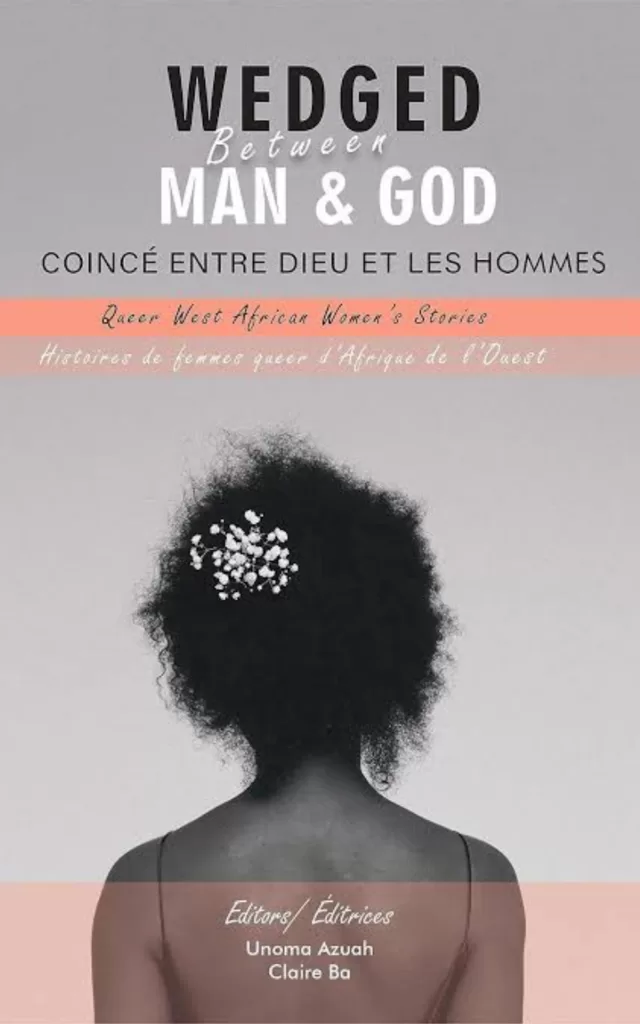
Azuah is an award-winning Nigerian author and activist, who, together with Claire Ba, curated the 2023 anthology, Wedged Between Man and God, a collection of non-fiction pieces telling the “untold stories” of queer West African women.
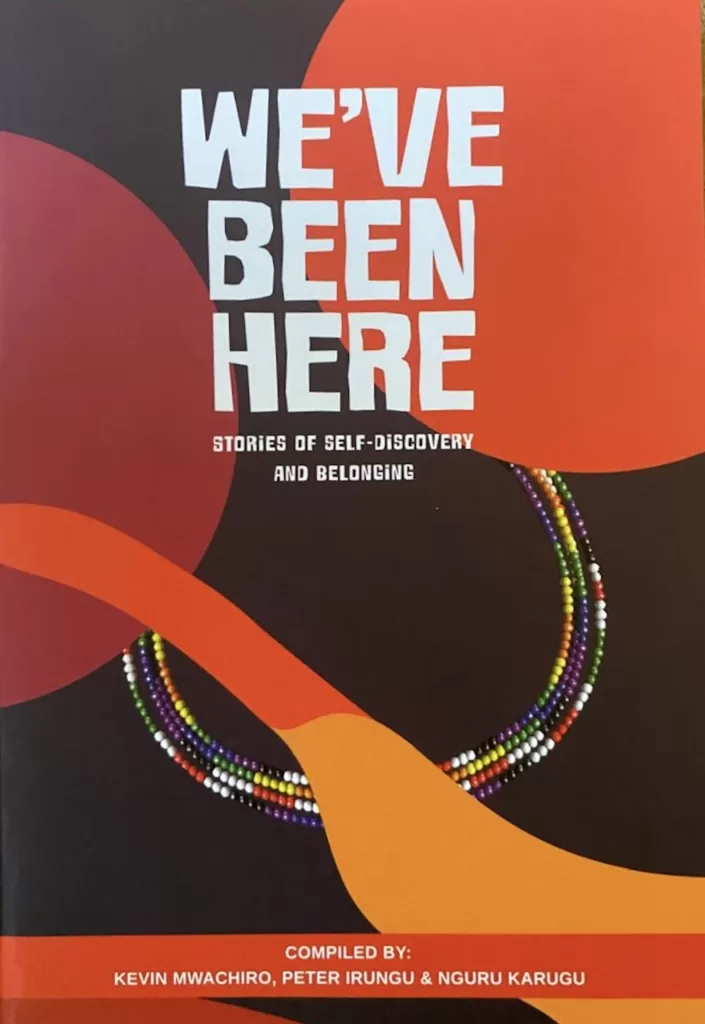
Mwachiro is a Kenya-based writer, podcaster, journalist and editorial lead for the recently released We’ve Been Here, an anthology telling the stories of LGBTIQ+ Kenyans who are 50 years and older.
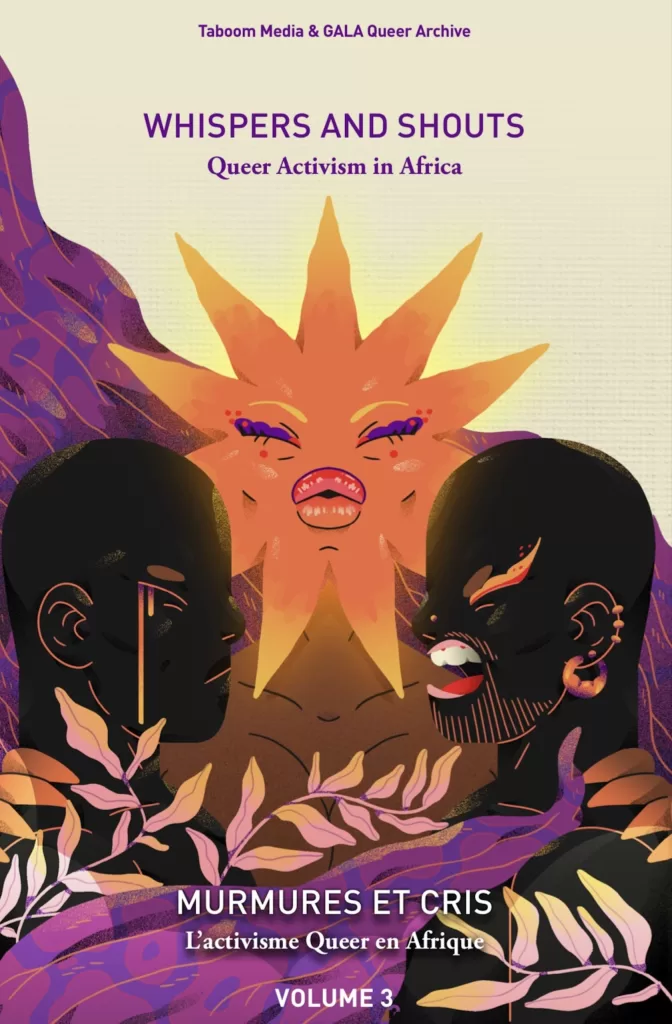
South African-based Pellot is the co-founding director of the media advocacy organisation Taboom Media, which produces the Queer Activism in Africa anthology series.
In this conversation, these four activists unpack the democratic nature of this narrative form, the challenges in putting such collections together within increasingly repressive contexts, and the power the written word has to foster real connection.
Caio de Araújo: So, first of all, thank you all for being here… [and] thank you for sharing the work. I really enjoyed reading the different anthologies… Something that really was interesting to me is the kind of convergence of all these projects that started being produced and published between 2020 and 2023. The first [question] that came to mind is, are we going through a queer anthology boom in Africa?
Unoma Azuah: Well, perhaps we’re creating more compared to the past. And I don’t know that I’ll use ‘boom’, because I feel that we need to catch up. We haven’t done enough, you know… because if you ask me, we’re behind.
Kevin Mwachiro: I agree with that. I would say it’s more… a resurgence of these collections, these anthologies. Because they’ve been there. I think now, with the internet [and] a cohesive Pan-African movement and community, we’re getting to know a lot more of what is coming out from different parts of the continent. So, I think there’s even a greater exchange of these stories. There have been collections that have been around for a while now. And I just think it’s almost, I don’t know whether it’s re-catalysed or just, you know… Like, there’s still so much more that we need to hear…And there’s a lot more happening online in digital spaces that is not in hard copy.
Brian Pellot: I’ll just add that ours is a regional, continent-wide anthology, but what’s been really exciting is to see Malawi- and Lesotho-specific anthology ideas start bubbling up, kind of building on the regional one to add more specificity so that more stories can get out.
Caio de Araújo: Why anthologies? Why are we seeing this resurgence of anthologies? Are anthologies a queer genre? A queer narrative form?
Unoma Azuah: I think anthologies are universal narrative forms. And it makes it quite economical to have so many voices in one place, you know. And [this is] just my opinion, [but] it’s the most convenient.
Brian Pellot: The most exciting thing about our anthologies with GALA is just how organically and collaborative they developed. It’s been three editions now with a fourth on the way. More than 100 people have contributed to them – including Unoma and Kevin as mentor editors. It’s been a really collaborative space where all the magic just kind of bubbles up. And it’s not one person telling the story. It’s not one person setting the narrative. It’s jumping around and allowing people to have their own say.
Kevin Mwachiro: It’s kind of more democratic, as well. You know, in the sense that it offers for diversity of voices to converge… It’s almost like community in print, when people gather together and [are] able to read each other’s stories. Like Unoma said, I don’t think it’s a genre that is specific to the queer community, but it is one I believe that we could capitalise on a lot more.
More so because they’re human-centred; they’re queer-centred. And it is an opportunity. I love what Brian says: where Malawi is thinking of something [and] Lesotho is thinking of something. I know there are colleagues in Somalia who have done something… An anthology that is done in Somalia for a Somali-speaking audience…It’s hard to get to sometimes, but it is simple. It is accessible. It also offers safety. You know, [with] We’ve Been Here, when people look at it, there’s a way of feeling that… ‘There are other individuals who’ve gone through this as well and I didn’t know that’. We’ve seen it with our contributors who sort of felt that, ‘I didn’t feel alone after I read other stories… that my journey was so similar to other people.’ And you can only get that in the anthology, short story format.
Caio de Araújo: This is very interesting because when I was thinking about this question of whether or not anthologies were a kind of specifically queer narrative form, I was actually thinking about the collective aspect of it, which is what Brian was alluding to. Any anthology is… a collective project.
And I think for this reason, they are particularly perhaps appropriate as a platform to tell collective stories as well. But I also feel, especially thinking about the specific books that we are discussing today, that they also allow for crossing boundaries of genre, of style, of medium or theme. They allow for a level of messiness – of confusion – that is productive. And in a sense, I was wondering if they ‘queer’ what storytelling is about. For instance, we have books here that navigate the written word and image, that navigate personal testimony and interviews, that navigate different kinds of tropes, laughter and tenderness. All of this under a single project.
So, I think perhaps there is something to be said about this diversity that the anthology as a medium, so to speak, as a literary genre, allows. Would you agree with that?
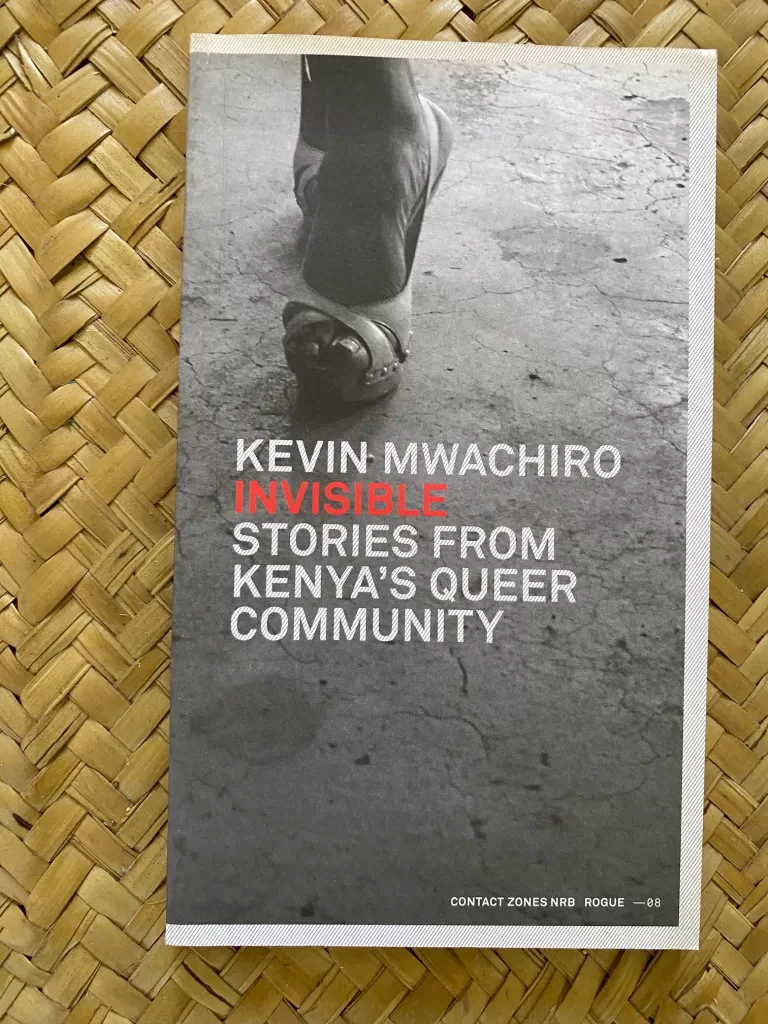
Kevin Mwachiro: I agree with that. I mean, it’s a beautiful way of putting it… Before I even did my first collection, Invisible, in 2014, around that time, there were other anthologies that were doing that. There was one tiny one, called Voices, which was pan-African… it had essays, it had poetry, it had photography, it had short stories. And for me, it was really beautiful to see the variety within that book.
Unoma Azuah: In the couple of anthologies I’ve done, one would have said, ‘Oh no, queer stories, again… They’re always sad. What is new?’ But based on the projects I’ve done, I’ve discovered that there are actually queer people who have stories that are not pretty much seen as mainstream.
In Nigeria, for instance, where there’s a 14-year jail term for homosexuals, there are couples who are living happily, you know, whereas there are regions of West Africa, for instance, where couples have to live separately or lie that they’re siblings. And there are also instances where queer people are doing well in terms of HAVING a good job, relating well with their neighbours, they’re not being victimised at work. So, I like the… variety [of] voices in that we can’t always say, ‘Oh, this is what we all are’. You can’t put us all under one umbrella. And that is, again, what anthologies do: being able to present, you know, a variety of voices under one roof.
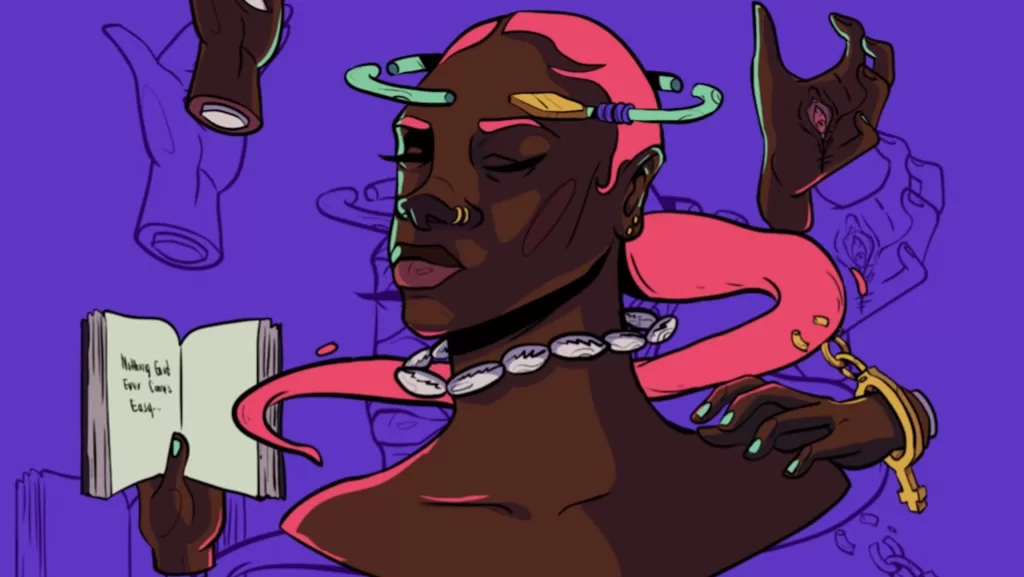
Brian Pellot: In terms of diversity of medium, all of our Queer Activism in Africa stories have an original illustration that’s commissioned after an artist reads the story and sometimes engages with the author. And whereas most of the stories follow a specific word length and format, the art is another way to engage with and enter and interact with the story. So we’ve been really fortunate to find so many queer and ally artists who are excited to be working on this project and help tell the same story, but [also] add another layer to the story. Tell it in another way.
Caio de Araújo: What I love about this potential for mixing genre and mixing medium is that it speaks to the democratic potential of anthologies. Because, we have to agree, there is a certain ability that is inbuilt in writing as a process that immediately already excludes a bunch of people, including a bunch of queer people, right? And I was thinking a lot about that.
What does it mean to allow for different types of contributions? I’m thinking, for instance, of people who do have stories to tell, and stories to share, but they may not necessarily feel comfortable with literature, with the short story as a format to tell their stories. And what I see in all these books is a touching, welcoming of different types of contributions. And not only contributions – drawing or designing – but also other types of written contributions, such as interviews and transcripts, in the case of [We’ve Been Here]. I found [that] quite interesting, because it also brings a dimension of orality, right? So, telling a story that becomes written, but originally told as a conversation.
And I think that that really does speak to this democratic potential. But also opening opportunities for emerging African talent, if I may put it like that, from people that may not be necessarily comfortable with the more conventional literary form.
Unoma Azuah: For me, it was actually part of a process I used, because I couldn’t really get every one of the contributors in the anthologies to write their stories. So, part of what I had to do was to travel, to meet them and interview them. At the end of which, I’ll give them a draft of the stories they told me to be sure that I represent everything they’ve said. So, I’ve used interviews, I’ve used the recording, I’ve used observations, at the end of which I always go back to be sure I’m not misinterpreting what is going on or what is being told.
Brian Pellot: Yeah, the first year we did Hopes and Dreams, the first of the queer activism anthologies we produced in 2021, it was a bit like that because we were… making it up as we went. Everyone has a story to tell, but some people weren’t comfortable writing those stories down.
So it did become more of an interview process for some storytellers, but always working together. But now that we’ve gone through the process four times, there’s a lot more workshopping that happens early on, so the stories are much more developed and written directly by the storyteller from the very beginning.
Kevin Mwachiro: I think one of the surprising things is not just the potential that you see in the storytelling, [it] is the confidence that [comes with telling] these stories, you know? You see that with the contributors. They look at themselves differently; in a whole new different light. Brian, when I took a copy of the latest anthology with me to Lesotho and presented it to [one of the contributors], he couldn’t believe that it was his. And he couldn’t wait to share it with people. And even in the beautiful images that you have in there… I think there’s an element of being seen; being heard. ‘I’ve been published and my stories matter’, you know?
I think for me, that is the bigger potential that we’re seeing. We are, I think, a lot more confident [as] queer people who are taking ownership of their stories. And for me, that’s magic.
Unoma Azuah: Yeah, it also reminds me of how some of the contributors in anthologies will talk about healing. They’ll talk about [how] they’re empowered. They’ll say, ‘Oh my God, my name is in print.’
And they don’t feel alone when, at the end of the day, they say, ‘Wow, people said they love this about [my] story’. Or they feel, like Kevin mentioned earlier, the surprise that we’re all connected in one way or another [at] the end of the day. So, it’s also another important element: empowering writers, making them know that they’re seen, and the ability to create communities that keep expanding.
Brian Pellot: And it’s therapy, too. It can be pretty heavy, conjuring up these stories and excavating the past. So, we also work with people in terms of just going easy on [themselves] and kind of doing it slowly. You don’t always need to rush into revealing everything. Like, it’s your right to keep all your personal stuff to yourself. We even say, ‘These are stories of change.’ So, if people want to talk about their organisation, how that was developed rather than… a more personal ‘coming out’ story or something, that’s fine. Whatever people are comfortable doing. But a lot of people have said it’s been very therapeutic telling their stories in this way.
Caio de Araújo: I wanted to explore something that Unoma said about people’s pride in saying, ‘My name is in print’, which also relates to this story that Kevin shared about taking the book to Lesotho. There is something about a book as an object; as something that carries with it some sort of recognition of self-affirmation… What is the currency of a book as a cultural object? Do people still value it… even in the time of social media?
Unoma Azuah: Well, that reminds me of a recent argument I had with a couple of friends. We were talking about, so what do we prefer? The e-book or the hard copy?… Perhaps I’m old school, because there’s still this thing about holding a book, coddling it, flipping through the pages, even… how it smells, like some kind of hard currency. And in spite of social media giving us access to a wide… whole new world, to me there’s still something about, something intimate, something powerful about holding a book.
Kevin Mwachiro: I agree with everything Unoma says because I’m of that type, too… You know, a physical book is a talking point. When I was in the UK on the underground, and this was before the internet, you’d see people on their way to work, either reading newspapers or books. And you’re… able to just see what other people are reading, you know? And you sort of build connection… Just now on the way here, I was having a coffee, I had a book on the table, and the waiter was like, ‘Oh wow, I’m a book reader as well. Here in Kilifi, we don’t have a single bookshop where you can access fiction or novels.’ And I’m like, ‘Okay, I’ll bring whatever I have.’ So, you know, books give you moments. Tangible books give you moments of connections with other human beings.
Brian Pellot: For us, we’re fortunate to be doing both. We publish the books online, and all of them can be accessed and downloaded as PDFs for free, and we also do a limited print run. But even on social media, they’ve all been put up with the illustrations, all the text you can scroll through. Everyone wants their stories out there.
So we’ve been trying to get them out in as many ways as we can so they can reach as many people, because that’s what the authors say they want. So, yeah, both are important for us.
Caio de Araújo: What is the context with your respective books?… Are they in the bookstores? How are they being read?
Unoma Azuah: Well, for me, unfortunately, they’re not in as many bookstores as I wanted to be in in Nigeria because it’s… seen as an illegal product, considering the law that exists in Nigeria.
But I’ve managed to have some of them in bookstores, but not as widely as I would have loved it to be… With the last anthology I did, Wedged Between Man and God, part of what I incorporated in the project is to have a book tour where every contributor across West Africa has an opportunity to invite friends, allies, and those that are non-allies, to listen and perhaps begin to think about the issue or to create conversations around it. So, I feel that if the books cannot move because of the limitations we have, based on the topic, then we’ll have to find a way to move the books ourselves… It’s a long journey, but at least we’ve started.
Brian Pellot: Our distribution has mostly been online and then sort of piecemeal with the hard copies. When there’s a relevant conference, we’ll bring a bunch of books and get them out to people. Or when we have, [as with the] example Kevin mentioned [of] bringing a book to Lesotho to give to one of the authors. These kinds of organic ways of spreading keep happening.
The first book was only in English. The next three were in French and English… And now we’re working to translate some of the stories into Kiswahili, Arabic and Portuguese. And those will all be done ahead of the ILGA World Conference that’s happening in Cape Town.
So that’s when we’re hoping to get a bunch of them out because they’ll be printed here. There’ll be people coming from all over the world to Cape Town for that in November. So that’s our big physical push beyond what we’ve done so far.
Kevin Mwachiro: With We’ve Been Here, right now, it’s just available in hard copy. We’re looking at getting it out digitally as well, because we’ve realised that when we did the book, it was primarily for a very Kenyan audience – and that was the agreement we had with the funder. [But] I think we underestimated the demand for the book, you know? And because we can’t sell it, we are distributing it as much as we can through different channels. And I think with the current mood in Kenya, people are cautious about stocking it in their bookstores, so it’s only available in one bookstore in Nairobi. But we’re… hoping that, in the course of the year, to have a digital copy of it, so that it can spread further.
Caio de Araújo: Another topic that I also wanted us to discuss is the political, social and legal context that we are experiencing on the continent at the moment… We have been seeing increasing anti-LGBTI backlash throughout the continent, with increasing discrimination, potential or actual criminalisation, queerphobic bills being discussed, approved, and hate crimes on the rise. And I feel like this kind of background very much gives a certain tone to the anthologies as editorial projects.
I think all the introductions in all the books allude to… writing as an act of resistance, as an act of resisting this imposed silence, resisting annihilation, and of being able to imagine how we can exist as queer people against this background. So, considering all of this, why is queer storytelling so important now?
Kevin Mwachiro: For all the reasons you’ve just said, queer storytelling is important now, more than ever before. They can take our liberties, but they cannot take our stories, and those stories have their own lives, those stories have their own legs. As we said earlier, the sense of empowerment that these stories give people… not just the contributors… but also to the collective, to the community.
With a book like We’ve Been Here, that has contributors who are 50 and [older], it just shows a sense of continuity… and people have an appreciation of the struggle that individuals had. But there’s [also] that sense of finding community.
There’s a young man I mentor, and when he got a copy, he didn’t believe there’d be queer folks as old as his parents who existed in Kenya. I think as much as we focus on the environments that we exist in, with the laws that are coming up, with the anti-LGBTQ sentiment that is rising, I like to focus on what we’re doing for our communities, what we are doing for our individuals. These stories are for us. These are stories that give us history, give us our own history. We are building up a queer history.
It’s interesting, when you look at the [Anti-LGBT] law in Ghana, specifically, it’s even trying to make sure that… efforts to document, efforts to immortalize our history, our voices, are being curtailed. They’re really hell-bent on making us invisible, inaccessible. And if it goes through, it’s just going to be really dire. In spite of what has happened in Uganda and Kenya and Nigeria, there is still room for creativity. There’s still room for storytelling. There’s still room for immortalising these stories. Hence, it is all the more important now. And I think, just to reaffirm what I said, these stories are ours.
And if we are able to tell our stories and share our stories and read our stories, that is our resistance. They cannot take away who we are. Anthologies like this have a place in advocacy, in lobbying, in resistance.
Unoma Azuah: Well, I like what Kevin said, and I particularly love that title: We’ve Been Here. It kind of reminds me of a recent conversation, or rather argument. I tend to find myself in a lot of arguments these days when it comes to queer lives. I had to give a talk about how the anti-same-sex marriage law in Nigeria is affecting even indigenous culture. And there have been cases in my state, Delta State, where same-sex marriages are being attacked. And they’ve been there. It’s part of the culture, right? So, there’s a case of this couple, two women [were married]…. To have babies, they have to get men from outside that marriage… basically looking for a sperm donor. So, the guy who pretty much donated his sperm came back to say, ‘Well, I want to claim this woman, and I want to claim my children.’ And the spouse, the woman – let me call [her] Isioma – fought as much as she could fight, but the guy took the case to the court. So, the legislative court said, ‘How dare you people have two women marry? That is against the natural course of life or justice.’
So, Isioma pretty much lost her wife and lost her children. What she now did was to go into African religious spiritual rites and called out to a deity. When that happened, the guy started having accidents that were unexpected. So, eventually, he was forced to come back to Isioma and apologise and return her wife and her children.
So, ‘we’ve been here’ pretty much needs to be told to everybody, because some Nigerians, unfortunately, do not know this part of their history. They do not know that queer lives have always been with us. As long as human beings have existed, we’ve been here.
So, our stories are very important. We teach history to reaffirm that we are all human and [that, as] humans, we cannot all be the same. To respect that life is not just black and white. We have to take care of the grey areas, and every spectrum has a right to exist. So, once again, more than ever before, we need to keep pushing out our stories because there’s nothing unnatural or abnormal about us. We have been here.
Caio de Araújo: I want us to reflect on… the relationship between storytelling and history… We’ve Been Here does this fantastic work of documenting lives of people that are over 50… For a person to put their stories in print, it also means putting their story in history. There is an element of documentation in all the books. There is an element of self-archiving. Are these stories queer history?
Unoma Azuah: I think it’s an extension of queer history, because I know that in Uganda, Professor [Syliva] Tamale has talked about pre-colonial Uganda, where same-sex relationships existed – well, exist – I want to put it in the present, because it has not stopped.
And then in northern Ghana, there’s also that similarity. And, of course, in Nigeria… [from the] Yan Daudu, to the Yoruba cross-dressing during festivals, to Igbo same-sex marriages. So it’s extending history.
So, it may feel as if we’re creating it, but when people are pretty much indoctrinated, especially through their religious lenses, to think that it’s not African, they need to be… reminded… We didn’t pretty much document it.. [it was] mostly oral. So, we may have lost that.
So it’s important for us to begin to document it, that no, it’s not un-African, it’s human. And if we pretend that we don’t know – or if, truthfully, we don’t know because our history does not exist in the context of print – then we need to be reminded that this has always been part of our lives. So we’re extending history… If colonialism erased us, we have to remind them that we were there. So our stories [are] more or less an expansion of what we’ve always been – and it’s important to be told.
Brian Pellot: [As journalists] we are always told… and say that journalism is the first draft of history. So, at Taboom [Media], we work with journalists and we work with activists. [These books are] the first draft of history. This is history happening. These books exist now. [They] will be in libraries. [They] will be online. It’s absolutely history, and it’s important to capture that history.
Because we’ll see how things have changed in 10 years, hopefully for the better… You can go back and compare and say, ‘Oh wow, I can’t believe this thing we’re going through now we went through 10 years ago [or] 20 years ago… Look how different that is from how things are now.’ So it’s a really cool ability to be able to capture that history. It’s really important and powerful.
Caio de Araújo: I wanted to conclude by using one of the final questions in one of the interviews for We’ve Been Here: What are your final words for your dream for the future? What do you have in store? What do you expect for the next few years?
Unoma Azuah: I want to keep creating spaces for queer people to breathe better… We need to get to the point where nobody cares about what your sexual orientation [and where they] pretty much see you as the human you are. So… that’s my goal in a nutshell.
Brian Pellot: Yeah, I think [my] dream is… for these stories to become boring… just everyday stories of everyday people doing everyday things.
Kevin Mwachiro: Mine is just to affirm that we are on the right track. We’re doing the right thing. The fact that this backlash is happening, is a recognition of the fact that we’re doing the right thing and our freedom will come. And to more storytelling, to more storytelling, to more storytelling! We are on that path.
Unoma Azuah: Amen! (Laughs)