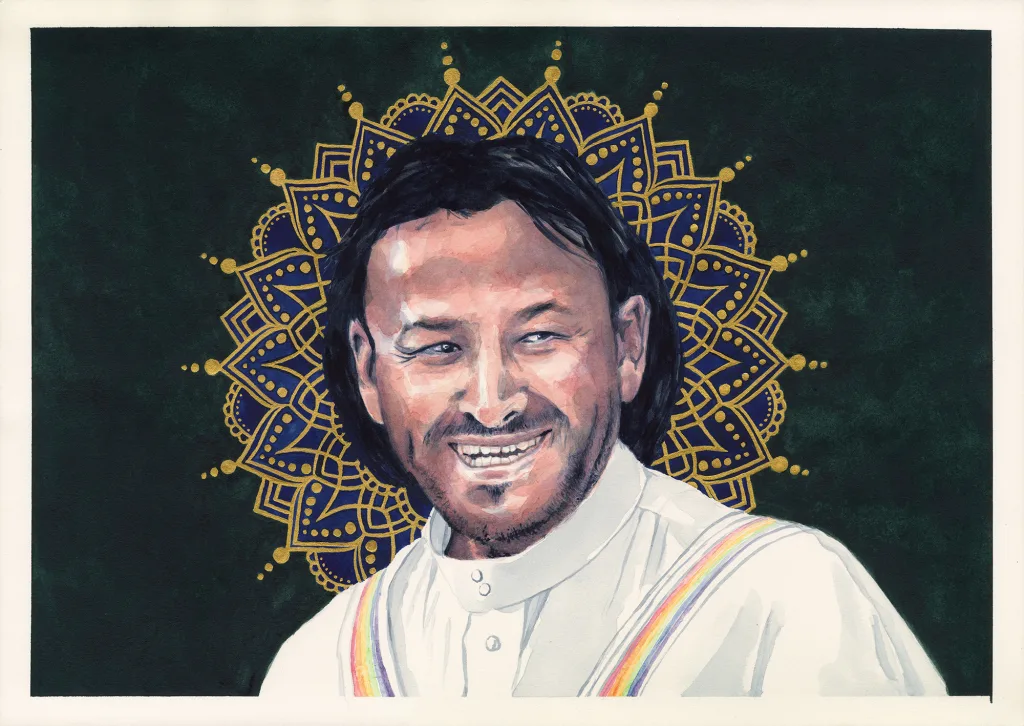
Monday, 26 May, marked 100 days since the murder of South Africa’s openly gay Muslim faith leader – and global queer rights icon – Imam Muhsin Hendricks. To mark the day, in an event put together by Inclusive and Affirming Ministries, the Act Church of Sweden, the University of KwaZulu-Natal’s Islamic Studies Research Unit, and the University of Cape Town’s Centre for African Feminist Studies, the inaugural Imam Muhsin Hendricks Memorial Lecture was held.
Following this inaugural lecture, three of Hendrick’s long-standing colleagues – Ishmael Bahati, co-founder and executive director of PEMA Kenya, and Ziyaad Follentine, a Masjid Committee member of the Al-Ghurbaah Foundation, and Laurie Gaum, an ordained minister in the Dutch Reformed Church – met to reflect on the imam’s life and legacy.
In this instalment of Beyond the Margins’s ‘In Conversation’ series, the three human rights activists reflect on the late imam’s teachings, his impact on their lives and the lives of the broader queer and faith communities, the chasm which has been left following his assassination, and the way forward for Africa’s faith-based queer movement.
Laurie Gaum (LG): Let’s start with how we first met Imam Muhsin…
Ishmael Bahati (IB): In February 2010, we experienced attacks on LGBT persons across the coastal region of Kenya. And this was led by Muslims and Christians. And the team that came to our rescue introduced us to Imam Muhsin. And because I was very much in the forefront – because I was identifying as Muslim, or I have a family background coming from Islam – they thought that it would be good for me to go for the Annual Islamic Retreat, which they were organising. And so, I was invited.
And the first time I got to Cape Town. I was taken to the Inner Circle mosque and offices. That was my first time meeting Imam Muhsin. I was still struggling with my faith and sexuality. But then, spending time with Imam Muhsin, I was, you know, admiring how he was really, really dedicated to religion. You know, waking us up in the morning to go for prayers, which I wasn’t doing. And he told me, ‘Don’t worry, you’ll be fine. You don’t have to come, just stay with us. And if you feel like coming in [to pray], please come in.’ So, yeah, that is how I got to know Imam Muhsin.
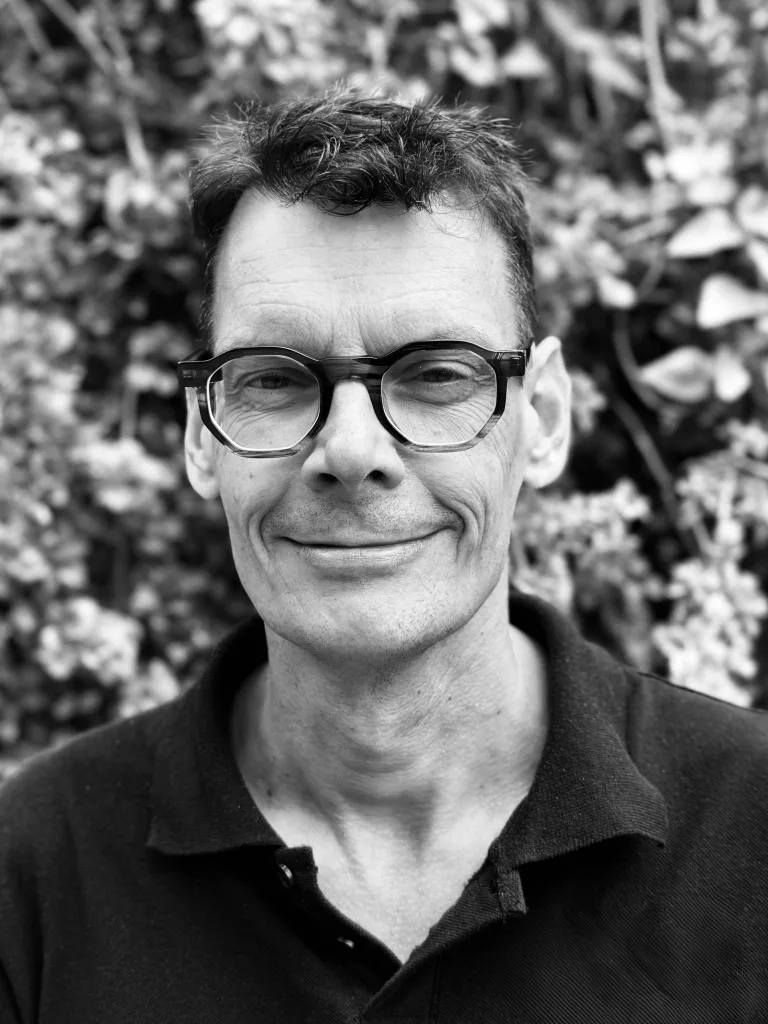
LG: I was able to meet [him] 25 years ago. It’s a bit difficult to get to the exact dates. But obviously, I was younger, and Muhsin was relatively young, and it was at [his] home, through mutual friends. And there was, of course, a lot of food and a wonderful meal, as we know Muhsin [to do]. This friend that introduced us just knew that there was a connection that needed to be explored further. And, so we, over time, [became] better and better friends, and realized that we’re actually sharing the same kind of calling across faiths, because I’m coming from the Christian background as a minister of religion myself. But it’s been so wonderful to see in another religion, a faith leader sharing my story to some degree, in the sense that we were both struggling to find space for ourselves in our different faiths. And I’ve been absolutely inspired by his example. At some stage, one couldn’t find many examples of spiritual leaders [whose teachings] surpassed religion. For me, he definitely did that. His spirituality was so attractive and beautiful.
IB: One thing I forgot to mention is that before I came to the Annual Islamic Retreat in South Africa, a friend of mine gave me a movie [they downloaded], a documentary about Imam Muhsin. And [in it] he was talking about his journey, and he was also with his kids – you know, this kind of family life – and living as a Muslim, but also identifying as a queer person. So, by the time I met Imam Muhsin, it was a game-changer for me, I must say. I was [asking myself]: ‘Okay, so is he really gay? Does he even have gay sex, really? Or is he just this gay man who is yet to actualize their sexuality?’
He opened up to us about many things. And it was interesting to see how down-to-earth he was. And also interesting to see the caliber of people he was bringing into the space. You know, from the least educated, let me say, in terms of understanding religion, to these big scholars. That power, that ability to bring these brains together and to balance them in one space, you know, for me, it was just awesome.
So, I must say that my work in helping the queer persons here in Kenya to reconcile their sexuality and faith began [there]. And Imam Muhsin remained my Wikipedia; my reference point – even from a distance. When I’m stuck, I just text, and I’ll get the answers I’m looking for.
I brought Imam Muhsin to Mombasa to help me do this work. And he came. And guess what? He did not charge us. We just needed to get him a place to sleep. And people really loved Imam Muhsin, and wanted to know, you know, ‘Can we talk with him?’ Even the Christians were saying, ‘Can we also have an opportunity to talk to him?’ We needed him for a whole month or maybe two months to be able to meet people.
The work that we have done with Imam Muhsin here in Mombasa is immeasurable. And we feel the loss. We feel the loss when we remember that, at this time, we don’t have that level of a person that we can bring on board.
Ziyaad Follentine (ZF): You know, I came from a relatively staunch family. You know, a family that practiced Islam. And so I was interested to find out if Imam Muhsin’s practices were in line with Islam; the Islam that I know, and the Islam that I was taught – or if it is out of the fold. And to my surprise, Imam Muhsin was more Muslim than the Muslim community that I resided in. And it was very comforting. Because not only was he Muslim, but he was someone who could become an example for me as a Muslim striving to be a better Muslim. He was exactly that. And that was incredible.
And so the impact… How he has influenced me, as an individual, and my activism… I think that his unwavering belief in me, as an individual, gave birth to an acceptance which was unshakable and immovable.
And that acceptance broke the barriers of the trauma and the woundedness that I faced as a queer person growing up. I think that no one could have possibly given me such a beautiful gift; a gift that said to me, ‘With this thing, with this belief in you, you will now be able to go and conquer whatever you need to conquer, including your inner demons; you can heal from your trauma and your woundedness.’
The last thing that I want to say about that – because there’s a lot coming up for me – is that Imam Muhsin’s words over the last couple of days [of his life] have been lingering in my head. When I said to him I can’t attend a function [because] I’m tired, he would look at me and say to me: ‘Do you know what’s going to happen if I must say I’m tired? Do you know what’s going to happen if I must give up? I can’t. We don’t get to give up, Ziyaad, because there are lives that depend on us.’
And I was, like, questioning whether I should continue this work or not. And then his words just popped up, you know, that we don’t get to give up. We don’t get to be tired.
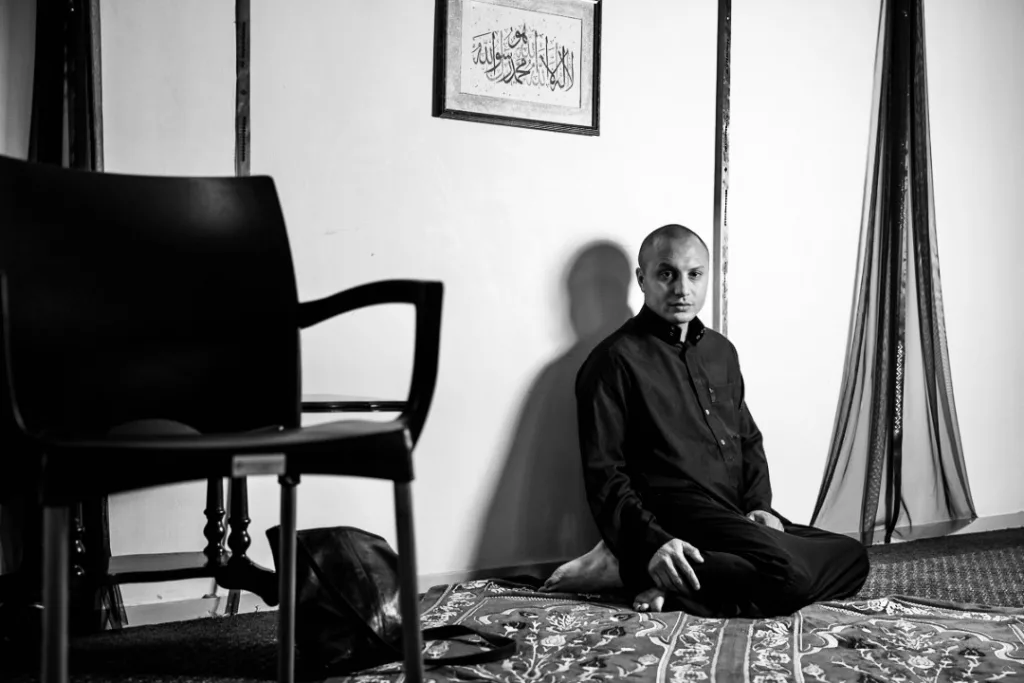
LG: I think about the core message of Muhsin that I’ve actually seen refined over decades. That, as his spirituality grows – and it was actually beautiful to see – every time I met him again, he was more and more and more expansive, in a sense, with a greater heart and warmth. And the humour he always brought was such a sign of a mensch with a great heart. And so this core message of compassion-centered Islam, which, of course, meant that he would include more than only queer people. That his message also attracted people across the line, if you want to call it that, of sexuality, of queerness, of religion. And the impact of that was always someone that one could turn to to speak to the best that Islam really represents. I think that was really embodied in the beauty of his spirituality.
He was always keen to do interfaith work together. He realized that that was important. We worked together in the Queer Faith Collective over the past few years. And the interfaith weddings he did also shows the broadness of his perspective. And it was clearly difficult at times, but Muhsin, through his compassionate heart, was able to open and be warm enough to accommodate and meet people where they are.
ZF: Something just came up for me, which I think is very important. I think that I would fail Muhsin, if I did not mention the fact that, you know, he’s been extremely instrumental in terms of activism for many people in connecting us with other activists, and exposing us to people who are doing the same type of work. He was that vehicle for a lot of us. Just like what we’re doing right now, Laurie. I mean, if it wasn’t for him, I would not have met you. If it wasn’t for him, I would not have met Ishmael, you know. And I would not have had mentors. And I think that, amongst other gifts, that was also a big gift.
LG: Absolutely, Ziyaad. Yeah, facilitating this meeting across differences, across religion, across generations. But then, the reality at the moment for us on the African continent is the advances made by the anti-rights movement. Ishmael, in Kenya, there’s just been that conference with some Americans being sent over to speak about family values in Kenya. How are we inspired by Muhsin’s compassion-centered Islam – which inspires me as well, as a Christian – to use religion as a force for good, and working against division? How does that meet our current context, which is sometimes so contested, because of anti-rights movements on our continent?
IB: One of the things that comes to mind was when Imam Muhsin was taking us through 10 steps of coming out [as queer]. And he really encouraged us to maintain family relationships, though not at the expense of our own happiness.
But he really, really tried to ensure that we should try as much as we can to still remain in the [family] unit. However, he told us not to shy away; not to be people that are just talking and not allowing people to question. With what has been happening in Kenya in the last three weeks, after the meetings, I realised that we do not have a platform to challenge or ask people to clarify things. They have totally closed us out [of] any opportunity where we can question the kind of family setting that they are advocating for and where it leaves queer persons. Or questioning the kind of family that they are talking about when talking about ‘African values’.
But one thing that I learned from Imam Muhsin is encouraging dialogues, as opposed to confrontations and debates, because debates are about who is right, who has more points to prove that they’re right – as opposed to what is logical. In fact, he gave as many examples of the teachers of Islam who used different opinions on the same matter in different spaces and said that this is because the context was different. And therefore, for us, for me,he laid an example for us to look into what we need to say. What is the right thing to say? But also building resilience, emotional resilience, bouncing back when things are very hot, or when people are asking things that you’re uncomfortable with, or when people are being too confrontational. How do you balance yourself and bounce back and still continue to be in control,even in hard situations? And I think this is what we have practiced a lot in the course of the last few weeks that we have had these anti-gender meetings in Kenya.
LG: Ziyaad, I’m becoming aware that the anti-rights pushback is considerable, in South Africa as well. We’ve got a progressive Constitution and we’ve got same-sex unions as a right, but still, the fact that it is not irreversible is also true. And then specifically in the context of Islam in South Africa, how do you see and how are you inspired by Muhsin’s example to use faith as a force for good rather than only creating division?
ZF: We are not unfamiliar with the anti-rights movement, especially within our own community here in Cape Town. And I think that when the fatwa of the [Muslim Judicial Council] MJC came out two years ago, the amount of anti-queer voices that sparked up was something that proved that this thing does exist within our community.
And it was very shocking and strange because Imam Muhsin served as a protective mechanism for our community. He took a lot of the brunt as far as the anti-rights movement was concerned. It was almost like he shielded us from that. So, we weren’t really exposed to it, because we had a beautiful little place, a mosque, to go to. You know, we had our events that were always safe.
The communication that we got, you know, from our organization, which was our primary source of information, I guess, was always just positive. It just dawned on me what a giant this man actually was, you know, shielding his community from the craziness that was out there. But with that said, you know, when we would ask him about how to approach these things, his response was always a value-rooted response. It was rooted in compassion, in kindness, in good character, and in love. And there was never, ever a sense of hostility or hatred even towards these anti-rights movements. It’s either he would laugh it off or he would say things like, ‘But why do they not come and talk to us? We are here.’
So, it’s that thing of encouraging dialogue that Ishmael spoke about. He did that. He actually invited people from the straight community into his space to come and see that we are not “an abomination”; that we are not strange, and we are not paedophiles. That we are normal human beings practicing a normal Islam. That we are human beings who created a space where everyone could come together and actually just practice whatever they needed to practice in terms of faith or love in a very safe way.
Obviously, there is a massive concern at the moment around the anti-rights movements that’s currently taking place in Cape Town specifically, but also in and around South Africa. And so, coming back to your question about how religion can be a force for good and not division, I think it is to do what Muhsin did. His teachings to us was to try and live authentically. He encouraged us to look within ourselves and to look at the hatred, the oppression, the fears within ourselves before we went out there. And I think that would be a start for us as a community, as a queer community: to do some introspection, and then to go out there, because then we’d be able to know how to deal with the anti-rights movements out there. And I think specifically the compassion-centered Islam that Muhsin taught us would assist us and would be a vehicle in creating a force of good and not division. Just encouraging this idea and reinforcing the principles of Islam and other religions, which are based on goodness and love. No one can argue with that once you put that argument on the table.
LG: This echoes something of my experience at the mosque. I think it was last year, when the South African Jews for Free Palestine met in the mosque and were invited in and welcomed there with hospitality, since they couldn’t find any space within Judaism that really invites them in and allows them to be critical of their own religion. And so there, in this queer mosque – where one could feel the fact that many queer Muslims are also not accommodated in their spaces of worship – there was this meeting across difference, which was really remarkable, I thought.
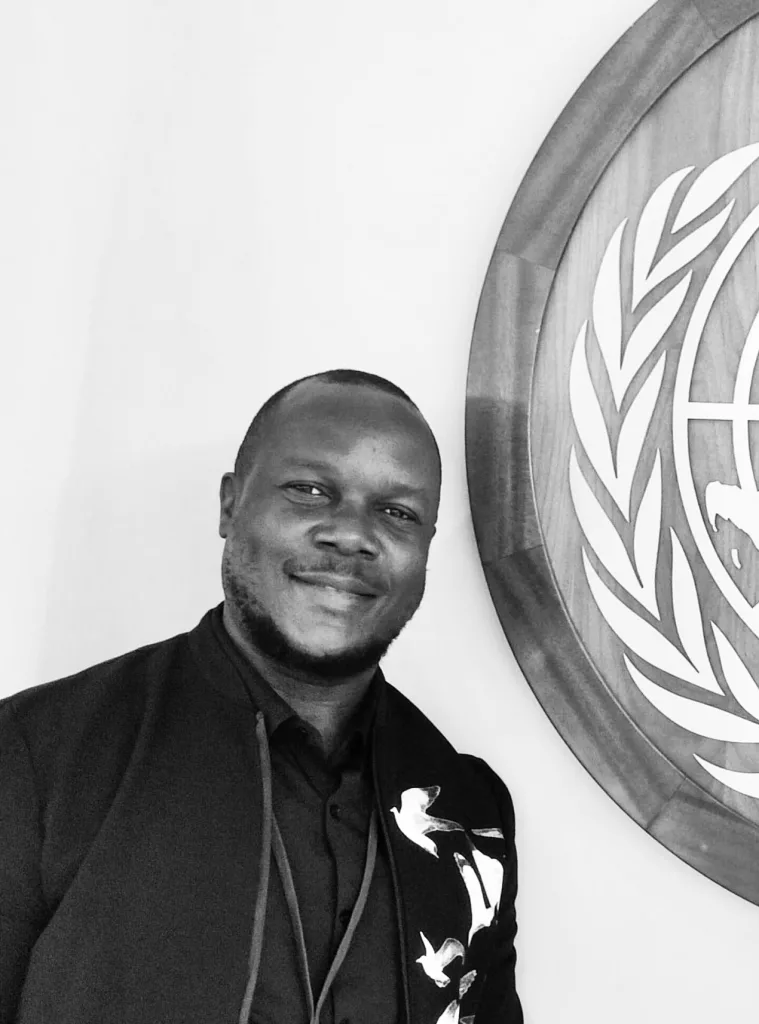
IB: I also just wanted to build on what Ziyaad was talking about. Yesterday, I was listening to someone on TikTok, and they said that if Jesus or Muhammad lived today, they’d be shot dead. And it dawned on me, as he was explaining, that it’s not because they were anti-religion, but [rather because] they were questioning, and the religious setting at that time did not allow questioning. You know, when you stand out to get clarity, it becomes a problem. And Imam Muhsin led by example, [especially] if you look at how Imam Muhsin spearheaded giving spaces or pioneering spaces that are accommodating to women. If you came to [those] spaces, you realize that the transgender people lead prayers, the women would lead prayers, you know. Those were really, really inclusive spaces.
And, therefore, in this era of anti-gender, anti-freedom [movements], it is just a setback to the large work. Or maybe not a setback, maybe it’s a wake-up call, because people are now seeing that people are becoming aware of the things they need to stand for.
Going forward, we are yet to figure out [how] to gather the courage to carry on with the work that Imam Muhsin has been doing in Africa, specifically. I wouldn’t speak for the world in general, but for Africa, specifically, we are yet to see someone that can really fill the gap that Imam Muhsin left.
However, Imam Muhsin empowered us, introduced us, helped us to come up with networks, [and] meet people that can actually support us in the manner that he used to. We are really proud to say that he was placed in our midst for a season – and for a purpose. Whether that was fulfilled or not, that is up to Allah to say. But for us, we are always grateful for the journeys [we took] and the work we [did] with Imam Muhsin.
ZF: I feel that as sad and as tragic and as hard as it is to have lost a father, a mother, a teacher, a mentor – such a great, great human being – there’s a birth on the rise. There is an opening that’s happening; that’s started happening already. More and more people – anti-queer, anti-LGBT [people] – have been given the opportunity to check their own personal faith. They’ve been given an opportunity to check their own morals and values and to check whether that is in line with their faith, and how they relate to God – or with spirituality or the universe, whatever they deem it to be. And that is not something we experience every day.
It’s the same as what’s happening in Gaza at the moment, right? More and more pro-Israel human beings are starting to question whether this is the right thing. Yes, it’s tragic that it took 80 000 people to die in order for us to reach this point as humanity. And I think similarly, Imam Muhsin – because of the impact that he’s had on this globe, on generations – it took this tragic event for humanity to now be open to dialogue; to be open to another way of thinking and being and doing and relating.
I think a lot of eyes and ears are on us as a queer community to see our next move to see how we’re going to react; to see how we’re going to navigate our way through this. And I think that we should stick to the [central] principle of a queer humanity, which has always been love. And if we do that, then nothing can go wrong.
I think that one of the best things that’s come from Muhsin’s work is that he’s opened up a door for allyship. Not just non-Muslim allies, Muslim allies [as well]. You know, those who, before, held a different take on homosexuality and Islam. And now, because of experiencing his training and his teachings, have become more open and more compassionate and more loving towards LGBTQIA+ people. And that’s been incredible. And if we can have more of those, then I think we’re moving into the right direction.