Despite its progressive queer-inclusive Constitution, South Africa is a country still riddled with high rates of anti-LGBTQIA+ violence. Three organisations, headed by parents, believe that getting other parents to accept their queer children is an important tool in pushing back against queerphobia – and they are taking their fight to the streets.
BY CARL COLLISON
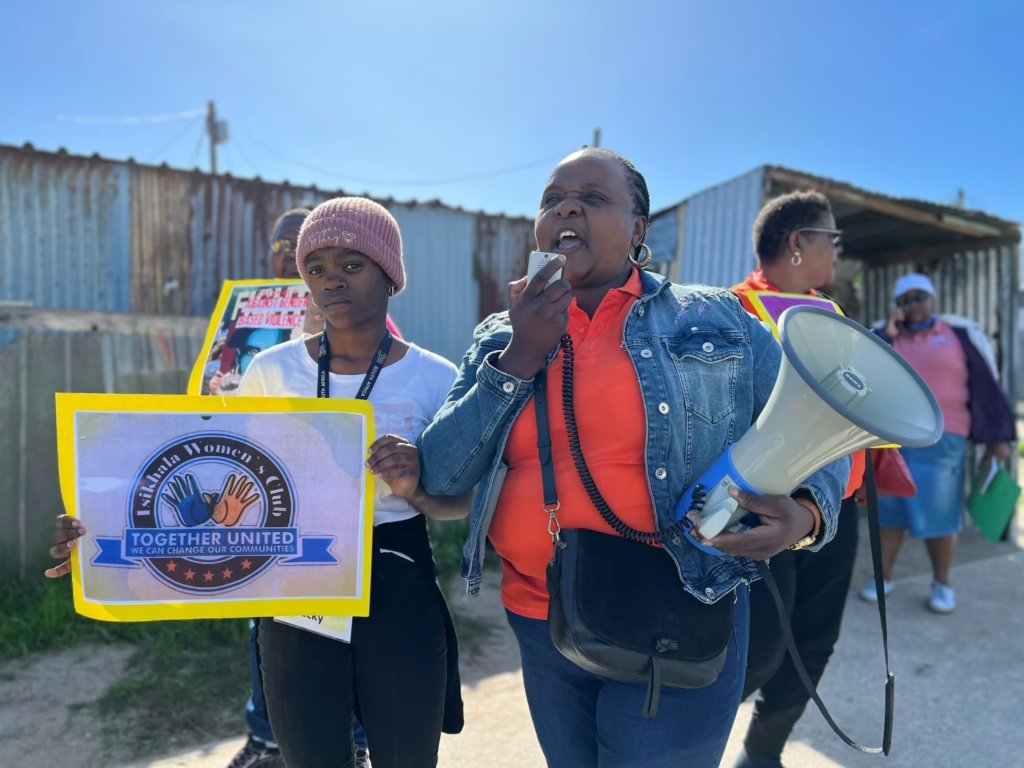
Making its way through the streets of Khayelitsha, a small group of about a dozen women attract the stares of curious onlookers as they take turns addressing the community through an erratically-working loudhailer.
“Senzenzi na … What have we done that we deserve to be killed?” one trumpets. Later, another declares: “Gays and lesbians are born like that, so we need to accept them as they are… If you don’t accept your child, they won’t be accepted out there.”
The women belong to an organisation called Isikhala Women’s Group. The march through Khayelitsha is part of the organisation’s activities aimed at reducing sexual and gender-based violence and getting parents of LGBTQIA+ people to love and accept their queer offspring.
One of the women in the procession is Martha Mashifane, a Johannesburg resident for whom it was the first time being in Khayelitsha, the sprawling township on the Cape Flats known for its high rate of violent queerphobic attacks.
A few days after the campaign, Mashifane laughs: “During that walk, I just held my breath. I was scared! That day I said, ‘Oh my God, I can’t believe we did this.’ You know, there is something about Xhosa women. Xhosa women can be brave. So brave. And for places like that, you need to have Xhosa women to walk around and to mobilise people.”
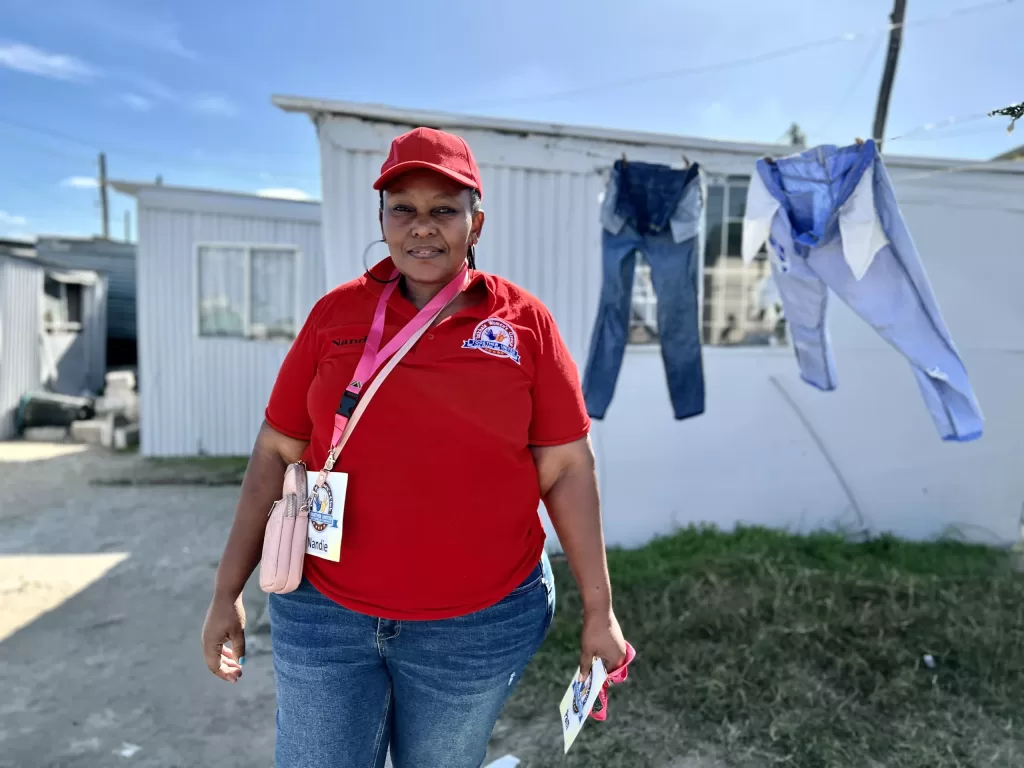
Nandipha Jovuka, a long-standing member of Isikhala Women’s Group, shrugs this off, with a smile. “No, I was not scared. It’s my kasi (’hood) and we are used to doing all these events,” she says.
Jovuka does, however, concede that “there are areas that we can’t go to, like Philippi, Site C, Lower Crossroads. We are scared of those places, because there’s no day or night there.”
For Jovuka, the threat of violence is not the toughest part of her activism.
“The most difficult thing about [this] is when you have to prepare an event or campaign. Because you need to have women that are strong. And who are not scared. You must heal [yourself] first. Because you can’t go there and heal another person if you are broken. So sometimes it’s a challenge. Because we fight for [LGBTQIA+ acceptance] and [against] gender-based violence, when we’re doing a campaign, we meet people who have problems and need help. So, it’s too challenging – especially if you didn’t have a course or were not taught how to [provide counselling]. We didn’t take a course or undergo training on how to talk to people. So, we just do it on our own.”
The mother of a 20-year-old gay man, Jovuka, says that her son’s sexual orientation has seen no pushback in their community “at all”.
“They love him so much,” she says.
It is, however, closer to home where Jovuka and her son experience the most discrimination.
“Some members of the family – my brothers – always push for him to play soccer. They say, ‘this moffie (faggot), this moffie’… and I always say, ‘This is my moffie; leave my child alone.’ So… It’s not easy. It’s not easy, even now.”
Witnessing first-hand the effects of anti-queer discrimination within families is, largely, the reason for Jovuka’s activism.
In August 2023, a few months after the campaign through the streets of Khayelitsha, Jovuka launched her own NGO, Isitha Women’s Organisation.
“Our aim is to get parents to love and care for their children – and to respect their choice. There is nothing wrong with them. We must just love them as our children,” she says.
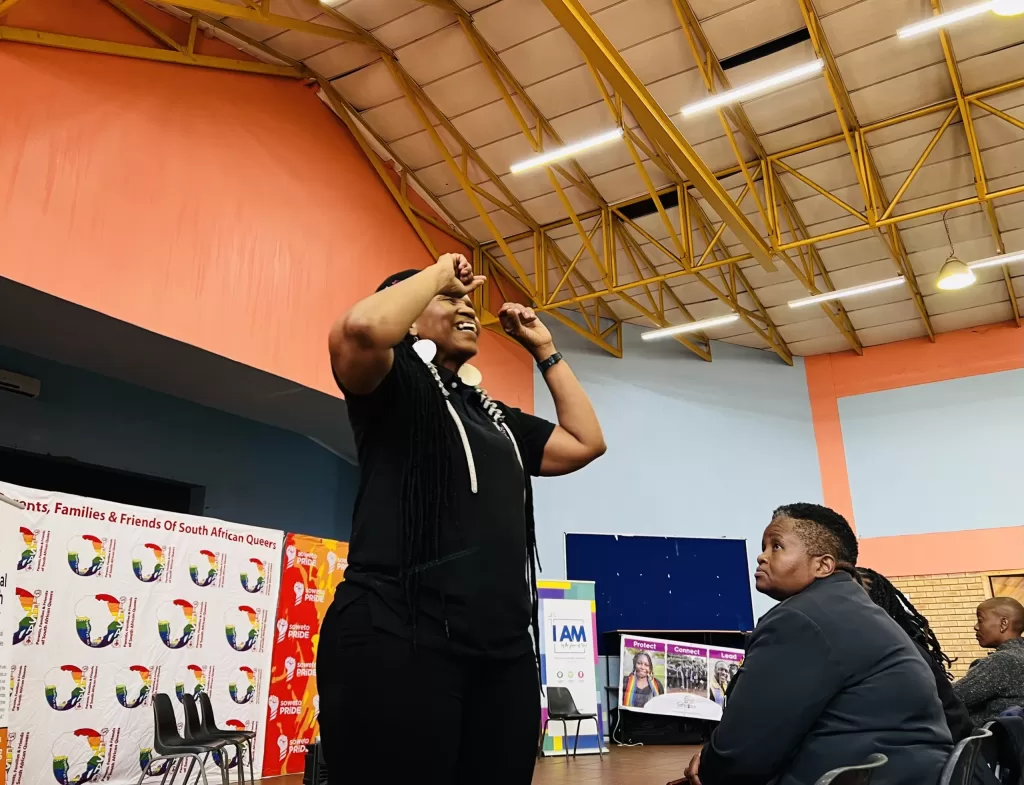
A day before the 2023 Soweto Pride march, an Interfaith Dialogue is being held at the Diepkloof Wellness Centre. In attendance are faith leaders, some queer folk and a smattering of queer rights activists. The hall is, however, mostly populated by mothers, grandmothers and family members of LGBTQIA+ folk.
As a precursor to the dialogue, Virginia Magwaza does a brief sexual orientation, gender identity, gender expression and sex characteristics (SOGIESC) education session.
“Umehluko phakathi komuntu oyi heterosexual noyi homosexual ukuthi umuntu oheterosexual uthandana nomuntu of the different gender, kanti ohomosexual uthanda umuntu of the same gender. (The difference between a heterosexual and a homosexual person is that a heterosexual person is attracted to a person of a different gender, yet the homosexual person is attracted to a person of the same gender),” Magwaza informs the attentive audience.
Magwaza is the managing director of Parents, Families and Friends of South African Queers (PFSAQ), an organisation she founded 10 years ago when she realised the need to get the families and friends of queer persons to understand, love and support them.
“I got a call from someone saying [their] friend’s brother had killed himself, and [had] left a message saying they could no longer live the way they were forced to live. We contacted the family [to provide some comfort and support, but the family was, like, ‘We don’t even want to hear about you guys … We don’t even want to hear the word ‘gay’.’ So that’s when I thought there’s a need for us to mobilise family. There’s a need for us to provide information for the families. There’s a need for us to have a core group of parents that can talk to them,” says Magwaza, who identifies as gender-nonconforming and has three children.
Having started its work in Gauteng, the organisation now works nationally and has, to date, engaged with “hundreds” of parents.
While Magwaza is clearly proud of the work PFSAQ has achieved to date, they sigh as they say: “I must just say to you that this work is hard. Parents and families are not going to just leave what they are doing to come in and listen to you saying ‘your children are gay and you have to live with it’, right? So we have to employ some strategies that will allow parents to see the light, bit by bit.”
One of the strategies employed by the organisation is forming partnerships with civil society organisations “that are non-LGBTI aligned”.
“For instance, there’s an organisation that works on environment and climate change. In their meetings [with people in various communities], they would have, like, more than 100 parents. They would insert us in their programmes, and we [would] talk about the work of PFSAQ. And the amazing thing is that half of the house will be saying, ‘I have a child’ or ‘I have a sister’. That’s how we get people to be part of PFSAQ.”
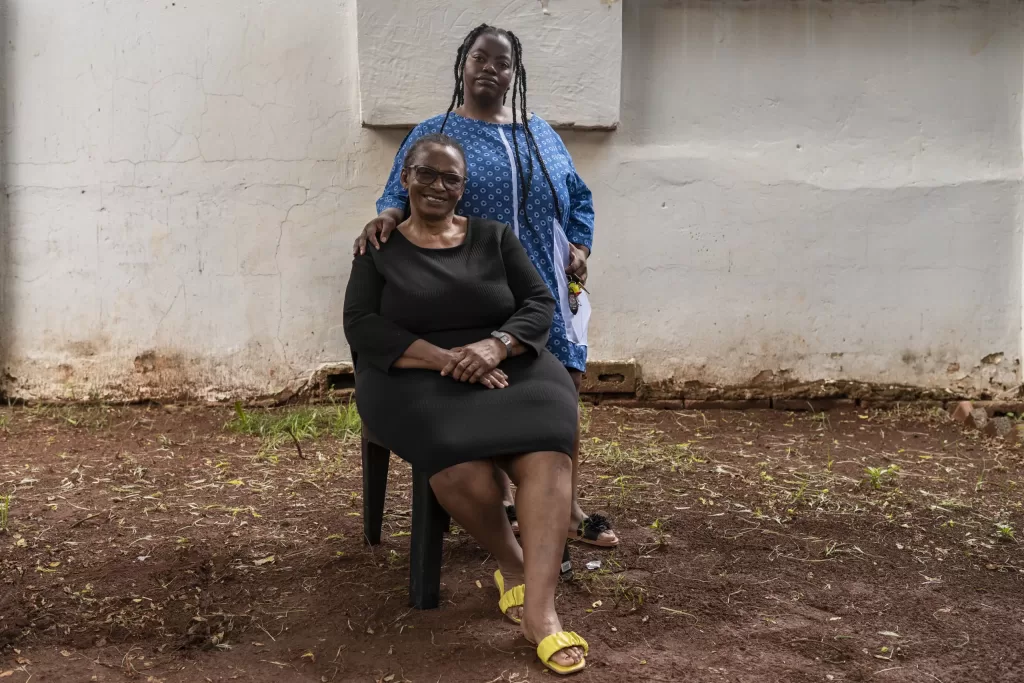
Thabisile Msezane is the founder of Turning Tides LGBTQIA Shelter, which, when it opened its doors in 2022, was one of only two shelters in South Africa specifically for destitute queer persons. Msezane established the much-needed facility, together with her daughter, Nandi, as part of the work done by Lerato la Basadi, an organisation Msezane established, made up of church women who travel the country – “wherever we are asked to assist” – to conscientise and support parents of queer children.
In 2012, in response to a spate of violent queerphobic crimes (“The killings were not stopping. It was one case after another.”), Msezane and other church women would travel to various parts of the country to both assist and comfort families who had lost loved ones to queerphobic attacks and also attend the court hearings of those accused of having committed the crimes.
In 2014, following the brutal murder of Disebo Gift Makau, a lesbian teenager, the group of church women drove to Ventersdorp to meet Makau’s family.
“My husband was still well at the time. He’s the one that was driving us all over. We went to meet the family … and started supporting the family through the courts. Dressed in our three different church uniforms, we would go to the court and be present. We would pray, before the court starts, for justice to prevail. And that Ventersdorp case was our first case that was really, like, a success. Because at the end, having gone there several times, the judge, when he sentenced the perpetrator, mentioned our presence. He said that ‘the women from the churches, their presence means that this is very serious’. And he gave him two life sentences, plus [15] years, for killing that girl … This really showed us that there is a need for us to stand up against these evil actions.”
An important part of Lerato la Basadi’s work is providing assistance to such families who, in their time of need, are not supported by their communities.
“Because, you know, it’s not somebody’s child, but it’s a lesbian that has died. It’s not somebody’s child, but it’s a gay person that has died. So you know, the neighbours sit back – unlike with any other funeral. But we showed up. Even if it’s far away, we showed up. And, you know, ‘ministry of presence’ – we made sure that we are present and together with the family. And after the funeral, we are present with the family, throughout the court hearings, and until the perpetrator is sentenced,” she says.
The women would also regularly travel to hotspots of queerphobic violence to conduct workshops and host prayer sessions with those communities – “especially church women within those communities”.
Aside from only a few exceptions, all three of these organisations work almost exclusively with women.

(Picture: Carl Collison for Arcus Foundation)
For Magwaza, this is largely due to “issues of intersectionality”.
“At one of our meetings, a parent once said: ‘When our children come out of the closet, we then get into the closet’. So, we find that a child comes out to their mother and the mother now goes into the closet on behalf of this child, because she is trying to avoid a situation where the father would say ‘it is your fault’.”
Magwaza adds that this would then often lead to domestic violence.
“Or,” they add, “we would get a situation where the family is okay with the child, but the extended family is not. [This leads to] parents becoming isolated from their extended family because they have accepted their child.”
This, Magwaza adds, is why mothers who know of their children’s sexual orientation or gender identity would say “‘we have to be in the closet [because of] our husbands, our own families, our neighbours, our community, our churches’.”
Despite the numerous challenges, and the slow pace at which concrete positive results are yielded, these organisations forge ahead with dogged determination.
“I always tell my team just one parent is a huge win,” Magwaza says, adding: “You know, the most rewarding aspect of this work is when you meet a queer person who says, ‘My mom does not – or my parents do not – accept me.’ And then you speak to the parent, they come and participate in our activities and the parent then says, ‘Thank you for opening my eyes. I nearly discarded my child. But now I’ve learned how to love them.”
Msezane lets out an exasperated sigh as she says: “You know, I’m turning 70 this year. Ever since I was young, there have always been, in families, and in my family, somebody who was gay or lesbian – and it was normal. They were never killed. So, the narrative that this is a Western thing that they’re bringing to Africa, it’s not true. There’s always been, you know… In any family, in any community. And they lived as part of the community and there was no cruelty towards them. So I don’t know where this thing is coming from right now. So yes, [we] need to raise awareness, to conscientise, to actually assist, because some of the families are ignorant or [face] pressure from their religious or traditional beliefs. But once you sit down with them and explain to them: ‘Look, this is your child. If you say your child is a gift from God, you don’t choose a gift. God has given you this child – to raise, to love and to cherish.”
(Picture: Supplied)
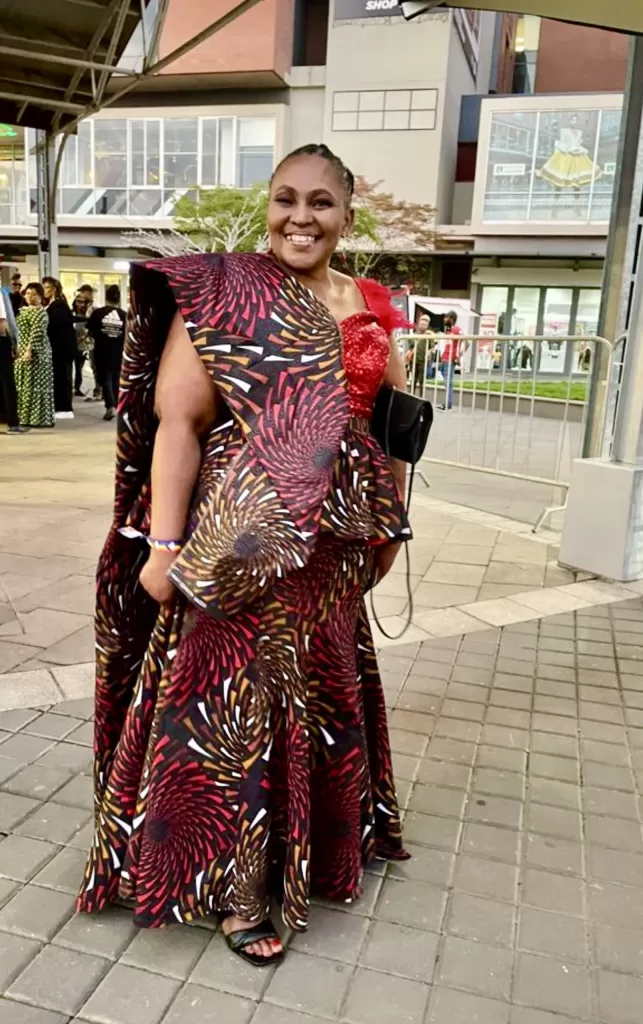
On a November night – just over seven months after participating in the street campaign through Khayelitsha – Jovuka is in Johannesburg, swapping her usual in-the-trenches takkies, T-shirt and jeans for a completely different look: a glamorous floor-length evening gown.
It is the night of the annual Feather Awards ceremony and she, along with fellow parent activists, Zodwa Rannyadi and Abraham Sebidi, have clinched the Best Rainbow Parenting Award.
“Eyi, what a great experience that was for me,” she says, before laughingly adding: “It was my first time attending such a ceremony. I didn’t know what was supposed to happen or what I was supposed to do. And then, winning the award, I was shocked. I was like, ‘Wow, it’s me on this stage accepting an award!’ Yho! All the cameras were on me… Eyi, it was something else.”
After a slight pause, Jovuka adds: “Winning that award is not just for me. It represents recognition given to parents standing together in support of the rights and dignity of our kids in the [LGBTQIA+] community… I don’t know how much we can change in our communities, but we are going to try as parents to do what we can do. Because these children, they need love. They need the love of their parents.”