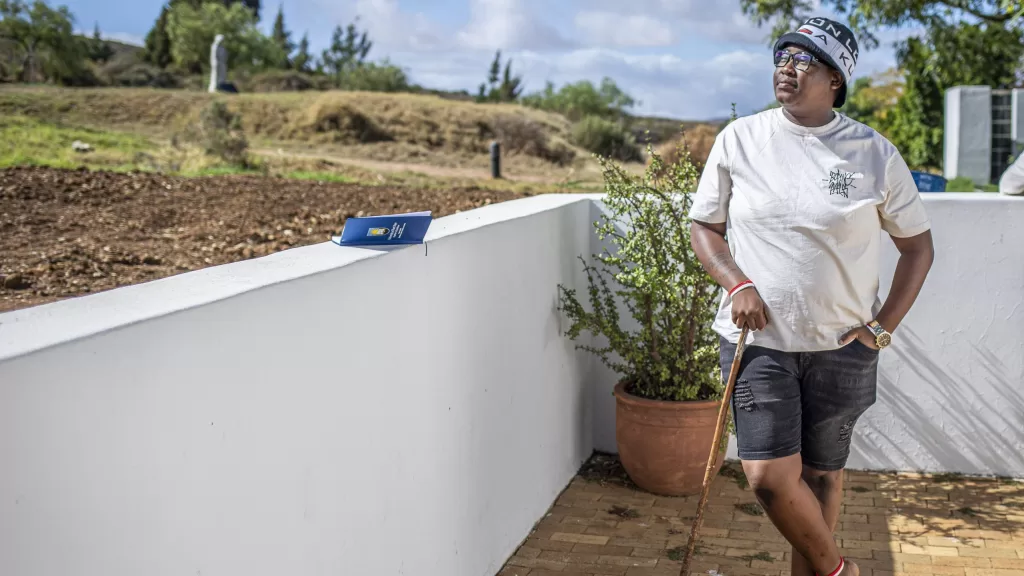
Every year, on the 27th of April, South Africans celebrate Freedom Day. On Freedom Day this year, I celebrated my intwaso. It was a momentous occasion for me.
I was always aware I had this gift of healing. My ancestral calling has been following me throughout my growth, with signs showing early in my childhood. However, being as a Christian transgender man, the path to accepting my ancestral calling has not been a smooth road. In addition to navigating my gender identity, I have had to question and explore what defines African spirituality as a Christian, and how to wear both hats – African spirituality and Christianity – in a way that compliments each other.
I had also been searching for a community of queer persons of faith. So, in 2022, I joined Inclusive and Affirming Ministries’ Journey of Hope programme. The participants within our cohort included accredited traditional healers, faith advocacy activists, devout Christians and scholars. I felt blessed. We all wanted to find ways to capture our personal narratives and find healing, but also to contribute towards transformation and inclusion within our respective communities.
During the three-year program, I learnt about queer theology and contextual reading of sacred texts that centre the lived realities of queer identities. It was refreshing because it moved away from exclusionary gospel.
Year one came at a point where I was experiencing a lot of personal turmoil, but the space – as well as the fellow participants – offered support that affirmed me. Year two conscientised me about how, as queer persons who embody difference, we can sometimes so easily fall into heteronormative patterns. It was at the end of year two when my ancestral calling became increasingly louder and, as the personal challenges heightened, this impacted my mental health greatly. My Journey of Hope family became my confidantes and sources of strength, with impromptu prayer sessions and video calls that became a lifeline for me. Since then, I have found a deepened appreciation for African spirituality.
The divide between Christianity and traditional healing often forces queer persons of faith to struggle in reconciling their faith, culture, and sexuality or gender identity. African spirituality offers fluidity in the understanding of gender, gendered cultural roles and African family systems. As queer people, we need more spaces to engage on African spirituality and the complexities we experience whilst navigating heteronormative, Christian communities. African spirituality got me to understand my role within the ecosystem: to nurture, protect and bring balance to a world that often strips us of our heritage and our affirming cultural identities. – Vusikhaya Khumalo, 33.
*Intwaso: The process of training to become a traditional healer practitioner.
- This Snapshot is an edited version of a piece originally published on the Inclusive and Affirming Ministries website
Republishing guidelines: This text and the accompanying images are available to republish, at no cost, either online or in print, with the following conditions:
- The author listed here is credited.
- Beyond the Margins is credited (including a direct link to this article’s URL or the Beyond the Margins home page).
- No edits are to be made to the text and/or images. Any desired edits need to be approved by either author and/or photographer and/or Beyond the Margins.
- None of the content here may be resold separately.
- For any questions, please email: marginseditor@gmail.com